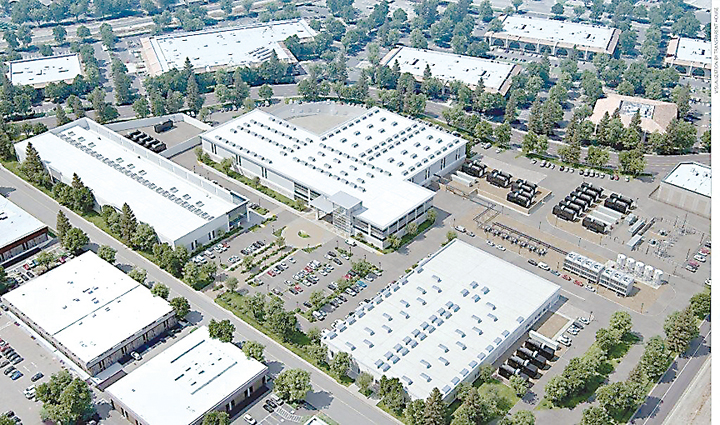
DATA CENTER COLOCATION

Two of the most important aspects of a data center’s success is the availability and business continuity. In today’s growing economy, every enterprise feels the pressure from internal and external demands by the IT sectors. One needs to understand that it is not an easy task to predict the need of the hour and design data centers accordingly. When the key services of a data center, availability and business continuity are endangered, the existing data center cannot shoulder all commitments, it becomes necessary to upgrade the facility.

Every company faces design and location limitations at one point or the other. When an undesirable situation arises, in order to continue with the services, without compromising on the quality, data centers can be upgraded to levels necessary to provide required performance.

A colocation data center can resolve issues of economic crunch and location glitches. Colocation centers are those facilities which provide customers with space for their servers and bandwidth. They house all the hardware, equipments, servers, data storage devices of other firms and connect these to networks across the globe. It literally puts the server in the client’s hands. Colocation is completely different from the traditional hosting although it might be a little mind boggling for new entrants. Hosting providers own the entire hardware and software infrastructure; they only provide space for websites, and services that serve up an application. In contrast colocation customers own their servers and hardware; colocation providers ensure the security of these with efficient power and cooling backup.

Managed hosting limits the ability of a client to customize the server environment. Colocation offers complete freedom to customize the servers. The client purchases the equipments, installs the software, and configures it according to the needs. After the system has been configured it is installed in a space provided at the center. The colo provider ensures a safe IP address, electricity, and connection to the network.

There are more than 400 colocation service providers with a wide array of services and price points to match. Some colo providers (as they are normally called) categorize their customers and prefer to keep their options limited to a particular sector.

Clients who need redundant equipment should look for data center colocation. It also acts an alternative to load balancing solutions. For any client who experiences heavy traffic and usage on a single day, load balancing becomes an important criteria to prevent the server from crashing. Colocation centers provide the necessary space for an effective load balancing strategy. Load balancing goes hand in hand with redundancy, colocation is effective in this regard.

Location is another important criteria an enterprise needs to ensure. Since the clients are the owners of the servers, having a colocation facility close to the workplace is important. Carrier flexibility, when the client wants one separate dedicated carrier line, is also a very important area that one cannot ignore. For this purpose, quality carriers are available.

Summary

Colocation facilities are a growing trend in the present economy due to-

  • higher reliability due to redundant systems
  • full time monitoring by live humans
  • lower network latency and higher bandwidth at a lower cost
  • Specialist staff, like network and facilities engineers, which would not be cost effective for any single client to keep on the payroll.
  • Data Center Talk updates its resources everyday. Visit us to know of the latest technology and standards from the data center world.Please leave your views and comments on DCT Forum
Share on TwitterSubmit to StumbleUpon

New CyrusOne Data Center in Chandler

CyrusOne LLC of Houston broke ground of their 1 million square foot data center in Chandler which will serve the I.T needs of large companies on the West Coast. It will be the largest data center in the Phoenix area and the second largest in the U.S, smaller only to the 1.1 million square foot Lakeside Technology center in Chicago. The data center will feature 90,000 square foot of multitenant office space, one of the largest speculative offices since the recession hit.

While the company would not disclose the project’s cost, citing competitive reasons, CyrusOne Chief Technology Officer Kevin Timmons said it is employing a new design for the facility that it has dubbed “massively modular.”  “That means the data center’s interior will be built in phases as needed to accommodate new customers”, he said. “The first phase is expected to be completed by the beginning of 2013”, Timmons said.

“No customers have signed on yet to use the data center, but CyrusOne is in discussions with ‘big names.’” “We have a number of dedicated customers who follow CyrusOne wherever we go,” Timmons said.

CyrusOne is a subsidiary of Cincinnati based telecommunications carrier Cincinnati Bell Inc. It is a developer and operator of large data centers where high speed web access and space can be rented by customers for their internet connected digital computing and storage devices.

“The massive co-location center will employ about 50 technicians, administrators and other staff when completed”, Timmons said. The project is likely to create a large number of jobs as the center is frontrunner to become a hub for related businesses and web hosting customers that will rent space in the adjacent offices.

The data center’s 57-acre site, near Germann and Price roads, will feature a 110-megawatt power substation being built by SRP, the largest dedicated substation for any existing data center in the U.S., and one of the largest substations in the Phoenix area.

“The property was ideal because of its size and proximity to several telecommunications carriers’ fiber-optic Internet backbone infrastructure, allowing redundant, high-capacity bandwidth”, Timmons said.

Data Center Talk updates its resources every day. Visit us to know of the latest technology and standards from the data center world.
Please leave your views and comments on DCT Forum

Share on TwitterSubmit to StumbleUpon

Rio Networks Set to Complete Construction of 12,500 sq.ft Data Center

Oregon based Rio Networks is nearing completion of its 12,500 square foot data center and collocation facility in Roseburg, OR. The data center is scheduled to open its doors in October 2012 and is a part of a bigger initiative to support high tech start up companies in Oregon. It seeks to provide cloud based infrastructure and a business incubator. The business incubator will be based on the second floor of the data center and will offer a blend of office space, business collaboration and technology infrastructure under one roof.

 Mark Bilton-Smith, President of Rio Networks, points out, “Businesses located in the Umpqua Business Center who take advantage of Rio’s managed services will be able to focus their time and financial resources on developing the core value of their business rather than managing their technology”. Special financing will allow tenants to fore go the upfront capital investment commonly required to start-up a technology business. “This is truly a game-changing concept for Oregon start-up companies coming to the business incubator.” Continues Mark Bilton-Smith, “In a time when small business financing is difficult to receive, we are proud to offer a world-class facility and technology infrastructure that creates a competitive advantage for otherwise under-capitalized businesses.”

The data center is located below the Umpqua Business Center. We chose the location for the many benefits the “Cow Creek Tribe” can provide but also the low risk of natural disasters, such as earthquakes”, states Bilton-Smith. “Sitting between the two major cities of Portland and Medford offers close proximity to major business centers without the common threats.”

Rio Networks is native of Oregon and provides cloud services like phone, email, data and internet. It covers areas in Portland, Hillsboro, Oregon City, Woodburn, Salem, Albany, Corvallis, Eugene, Springfield, Redmond, Bend, La Pine, Roseburg, Grants Pass and Ashland. The company has a 96% customer satisfaction score within the business communities of Oregon.

Data Center Talk updates its resources every day. Visit us to know of the latest technology and standards from the data center world.
Please leave your views and comments on DCT Forum


Share on TwitterSubmit to StumbleUpon

CoreXchange Offers Discounts for Data Center Migrations

Order colocation solutions online https://www.corexchange.com/colocation-solutions now and the setup fee is automatically waived.  For an additional discount of 50% off first month, enter promotional code MOVE. Offer valid on all half rack (starting from $299), full rack (starting from $399) or private cage (starting from $1,859) orders placed online by May 31st.

An offer extension is available if currently under a contract.  Call or email CoreXchange Sales (877-271-7737 ext. 2 or sales@CoreXchange.com) with your colocation contract expiration date and receive 50% off first month when you are ready to move.

CoreXchange Colocation Advantages

Enterprise-level colocation is more affordable than ever before.

CoreXchange bundled solutions include:

Secure half rack, full rack or private cage space

Power, bandwidth and IP addresses

100% power and network SLA’s available

Bandwidth from 1 Mbps to 1000 Mbps (up to 10 Gig available)

Burstable of unmetered bandwidth options

Selections for redundant power drops, network handoffs and cross connects

Basic or advanced monitoring and off-site data storage options available

Scalable Data Center Space

SSAE 16 SOC-1 Type II compliant data centers

Facilities designed and managed by CoreXchange

Redundant power and HVAC cooling systems

High Performance Network

Premium bandwidth mesh of multiple, Tier-1 Internet carriers with BGP routing

Latest generation routing and switching equipment

Carrier neutral options available

Owned and managed transport to Equinix with access to all Equinix carries

Onsite Support and Secure Access

24-hour onsite NOC support

FREE remote hands and eyes including reboots

24/7/365 physical access for customers

Pre-approved access control list with ID check-ins, plus secure badge system

About CoreXchange:

CoreXchange’s comprehensive solutions include colocation, high performance network connectivity, Internet access, Dallas disaster recovery, and a business continuity center. Headquartered in the globally recognized Dallas Infomart and led by a highly experienced team of networking services technologists and executives, CoreXchange provides services at its enterprise-class data centers or customers’ remote locations, via local loop or metro Ethernet.

SUMMARY: No set up fee on all online orders; plus, 50% off 1st month colocation services with CoreXchange migration.

TAGS: performance network connectivity, Internet access, business continuity center, data center colocation, Burstable unmetered bandwidth, Tier-1 Internet carriers, Dallas Infomart

Data Center Talk updates its resources everyday. Visit us to know of the latest technology and standards from the data center world.

Please leave your views and comments on DCT Forum.

Share on TwitterSubmit to StumbleUpon

Colocation Pricing Trends

Data Centers are growing very fast. The Reason is all information is managed in these only and these are now business critical. It is very vital to keep the cost of IT related expenses for organization. All companies need to have dedicated data centers as it might not have proper Return on investment. Colocation is solution to such companies and businesses. Building your own datacenter need lots of efforts, Time and money. In Colocation, Service provider provides you facility and some bundled services at affordable price.

Colocation provides some and more of following services to you to have datacenter established.

  • Space: It can be measured as Rack space or Square fts.
  • Cooling: Cooling remains one of basic necessity along with space.
  • Power: Electric power along with appropriate Power backup is also part of bundle service.
  • Physical Security: Only authorized people will have access to colocation area.
  • Facility related Services like fire safety, battery room, cleaning, sanitation etc are part of real estate and offered along with colocation.
  • Internet Links and other Communication services are charged separately and optional.
  • Managed Services like managing your servers and other infrastructure pieces are also offered.

Colocation cost varies from $1000 to $2600 per cabinet/Rack. It also depends on all factors we considered.

This list is very specific to Service provider or Colocation service and most of times these services are customized for customers so that it suits best to customer requirement.

As the trend for colocation is increasing day by day, these services are becoming more affordable and have better return on investment. Factors mentioned above influence the cost for colocation services. There are few more factors which affects the
costing offered by services provider:

Geographical Location of Colocation Data center:

Location of datacenter influences the real estate value of datacenter hence impacts rental value for colocation. Also how suitable is facility for the Disaster Recovery is considered factors.

How much do you need?:

More space you need provider will give better pricing. It is same as retail vs wholesales services.

Diversity Provided by Colocation provide for Communication links:

Are the internet, WAN and other telecom related links have robust and redundant paths. To provide this kind of facility, service providers have common area for Telecom service providers. This enables customer to select from multiple options.

Term or duration for which customer is looking for Colocation services.

Contract time duration also affects cost offered by Colocation service provider. Longer you stay more economical services are.

Scope for future growth and expansion

Colocation Service provider also enables you to expand or modify your space as and when needed. This keeps you out from worries of capacity planning for future.

Conclusion:

Most of times colocation is one of the best options for housing your business critical systems. With time Colocation service are getting more effective and affordable. It helps to keep your IT budget low compared to having your own data center. Colocation Service provider also provides better professional services for facility, Security, Cooling, Power, Power backup etc. Also have scope for future growth as needed.

With time colocation is becoming more and more competitive and cost effective. The Future is Colocation for small and medium sized businesses.

For more updates on data centers, visit Data Center Talk.

Share on TwitterSubmit to StumbleUpon

Telx Opens New 32,000-Square-Foot Santa Clara Cloud Connection Center

Telx Opens, New Santa Clara Cloud, Connection Center, Data Center, power calculation, cooling system, fewer generator, Green Data Center, datacenter, data center services, data center management, about data centers, internet data centers, datacenter services, datacenter solutions Business continuity

Interconnection and colocation provider Telx has added 32,000 square feet of high-power density, 2N redundant, energy-efficient space to its C3 Cloud Connection Center portfolio as the anchor tenant of a new Vantage Data Centers facility in Santa Clara.

C3 Cloud Connection Centers

Telx has designed its C3 Cloud Connection Centers to appeal to customers wanting the delivery of cloud services. All its C3 facilities offer advanced cloud services and connectivity solutions from a variety of global providers, collectively known as Telx’s InterConnection community, which is meant to complement the more traditional services offered by colocation providers.

Colocation and Interconnection Services

The Santa Clara location is Telx’s 17th Cloud Connection Center, according to the company’s announcement on Monday, and it will offer premium colocation and interconnection services capable of supporting upto 400 watts per square foot power density (or 16KW per cabinet in a 2N redundant infrastructure design). It also offers direct access to Telx’s customer ecosystem within its C3 data centers at 1100 Space Park facility in Santa Clara and 200 Paul in San Francisco.

Vantage Data Centers campus location

“Leveraging our new Vantage Data Centers campus location, Telx is well positioned to meet the demands of Silicon Valley organizations by offering a rich portfolio of colocation and interconnection services — at the lowest energy pricing — that surpass area competitors,” Telx’s President and Chief Financial Officer, Chris Downie said in a statement. “Now, California-based companies have the option to instantly take advantage of cloud-based services while leveraging unprecedented connectivity to the rest of the world.”

According to a recent GigaOM report, CEO of Telx Eric Shepcaro said dense connections to communication pipelines are crucial to the functioning of businesses. “The biggest data center choke point today is not compute and not storage; it’s the network,” Shepcaro told GigaOM. “With more mobility and machine-to-machine communication, with high-frequency trading and video, our differentiator is our networking.”

latest Addition in Green Data Center

The newly commissioned facility is also the latest addition to one of the most green data center compounds in the country, featuring an innovative design that guarantees a Power Usage Effectiveness rating below 1.3 to maximize energy efficiency.

Telx’s other data centers in the Bay Area are operated by Digital Realty Trust and located at 200 Paul Ave., San Francisco, and 1100 Space Park Dr., Santa Clara.

Last month, Telx announced plans to build a three-story, flagship data center in in Clifton, NJ, adding some 215,000 square feet of high power density, energy efficient space to the company’s C3 Cloud Connection Center portfolio.

To keep yourself updated on the latest happenings in the data center industry, please visit us at Data Center Talk.

Share on TwitterSubmit to StumbleUpon

Top ten data centers for colocation and dedicated hosting

It is impossible to declare a list of “top” data centers that will satisfy everyone’s criteria. In terms of sq

uare footage or availability of computing resources, most of the “top” data centers in the world today are dedicated to the internal operations of major corporations and government entities; they are not available to the public for colocation. The ideal data center selection will vary considerably, depending upon the unique requirements of different customers at different stages of growth.

Very small organizations are best suited to hosted cloud infrastructures with no physical hardware owned by the customer; very large organizations may need dedicated data centers that are entirely owned and operated by the company. Some data centers claim to be a “top” choice because they offer the latest technologies such as hydrogen backup power or greener thermal management systems, but what really matters is that your servers stay online.

For this list, we deem a data center worthy of our “top” rating when it is a recommended choice for an “average” customer, seeking between 1 and 42 units of rack space and 1 to 10 megabits of available bandwidth. The data center must offer unescorted 24/7 access, network latency of less than 30ms, on-site support staff and a reliability rating of at least TIA-942 tier 3 (meaning the customer can tolerate up to 1.6 hours of downtime annually). This suits an internet-driven company who needs a secure, reliable, high-bandwidth home for their most critical servers. These are data centers with a proven track record of delivering quality services at acceptable price points.

The main factors a company should consider when sourcing a data center are :

• cost / value
• location
network reliability and performance
• scalability
• security, including disaster recovery solutions
• environment conditioning (thermal control, air contamination, power quality)
• availability of special services such as monitoring, network engineering, support etc.

Cost is of course the single most important factor; a company must select a solution that makes budgetary sense. As we are looking at colocation service, the location must be accessible to technical staff while being close to major internet peering points; in Canada, the primary locations are Toronto, Montreal and Vancouver (in the USA, network fabric and data center locations are much more widely distributed). Network performance must be on par with other major data centers, with a good record of reliability. Scalability ensures the customer can grow (or shrink) according to it’s realworld needs over time. Effective security is vital to prevent unauthorized access to company resources, and environmental conditioning ensures colocated equipment operates normally.

#1 : Peer 1 – http://www.peer1.net

Peer1 is our favorite data center overall. They have facilities in Toronto, Los Angeles, Miami, New York, San Jose and Seattle. The technical and support staff are generally excellent, and the pipe is fast and reliable. Peer1 offers an almost unheard-of zero-downtime Service Level Agreement (SLA). Peer1 is a great vendor for quality bandwidth at low cost for organizations requiring 1-100 megabits of unmetered internet access. They have recently been concentrating on managed hosting and cloud services, but we think their best offering is “plain old” colocation. Some Peer1 data centers can be a little messy, with occasional environmental issues and often no 24/7 on-site support staff — but overall Peer1 offers excellent value.

#2 : InterLink – http://www.iplink.net

This small data center is located at 44 Victoria in Toronto. If you’re in Toronto and you don’t need to be at 151 Front Street, InterLink might be a cost-effective alternative. The data center is by no means state-of-the-art, and you’ll be 1-2 hops away from most of the major peers — but the cost savings might make this alternative worthwhile for you, especially if your technical staff are located in the downtown core.

#3 : Equinix (Switch & Data) – http://www.equinix.com

Equinix offers a huge choice of peering providers, for those customers who consume a lot of bandwidth or seek the multi-homed connectivity options provided by being located in a major peering data center. Data centers are located in Atlanta, Denver, Miami, Seattle and Toronto. For smaller organizations, it’s generally best to find a reseller located in your facility of choice.

#4 : YesUp – http://www.yesuphost.com

YesUp can offer some good colocation deals for a mid-sized internet-driven business in Toronto. Facilities are nothing special, but the pricing is very attractive.

#5 : iWeb – http://www.iweb.com

iWeb offers some budget-friendly deals on colocation and dedicated servers; they are quite popular for low-end colocation needs, starting from a single unit of rack space – however their four data center locations are in Montreal.

#6 : Verizon (formerly MCI) – http://www.verizonbusiness.com

MCI historically has had some of the best pipe, and their SAS-70 compliant data centers are robust and well-managed. The network has an excellent uptime record with some of the best latencies around. However, their burstable plans are on the expensive side; contracts generally “lock in” the customer at a commited bandwidth rate plus an additional rate for bursting. With MCI, this rate generally increases with the amount of bandwidth used, which means a growing company (or an unplanned anomaly on the network) can result in a huge bandwidth overage bill. Make sure your network is restricted (by contract and/or hardware/software bandwidth rate limiting solutions) from consuming excessive bandwidth.

#7 : Softlayer – http://www.softlayer.com

SoftLayer focuses on commodity dedicated servers. Initial pricing is attractive, but extras such as bandwidth and high-end storage/processor components can quickly inflate the monthly bill. Data centers are located in several US states; they now provide offshore locations as well.

# 8 : capPOP – http://www.calpop.com

CalPOP has good pricing on basic dedicated servers and location in it’s Los Angeles data center. Watch out for expensive additional fees. If you use their hardware, be sure to run consistency checks on the memory and hard discs.

#9 : RackSpace – http://www.rackspace.com

RackSpace offers managed servers only, and has rather absurd pricing — buttheir support is somewhat above-average. Perhaps a choice for those who aren’t comfortable maintaining their own server infrastructure. You’ll pay a premium for hosting here, but you’ll get an answer to your technical support in under 15 minutes by someone who understands English.

#10 : Layered Tech – http://www.layeredtech.com

Layered Tech is an option for customers who need assistance with compliance management, such as PCI and HIPAA. Of course, you’ll pay a premium for this service.

To read more on data centers and their effective management, visit now Data Center Talk.

Share on TwitterSubmit to StumbleUpon

Colocation

The next logical stage of infrastructure development, after dedicated servers, is colocation. With this model, a customer is leased rack space, power and network bandwidth by the hosting provider. The provider also manages site security, air conditioning and other requirements of the data center. All servers and peripheral devices such as switches, routers, firewalls and load balancers are owned and managed by the customer.

Entry Level Colocation or Fractional Colocation

Entry-level colocation, (often called “fractional colocation” when it is sold in units of less than a full rack cabinet) is available in various capacities based on the rack space requirements, such as a single-U solution (for a single server), “octal rack” (11 U, suitable for several servers plus peripheral devices), “half rack” (22 U) or “full rack” (44 U).

What All Does a Colocation Plan Include?

Colocation generally includes a basic amount of power service included in the basic price, for example “5 amps included with half rack plans”. Because the profit margins on power delivery tend to be high, customers need to carefully consider their power requirements when deploying colocated servers. If a single 1-U server burns 300 watts under maximum load, 5 amps of power is only sufficient for two such servers – leaving 20 units of space unusable.

Network Bandwidth of Colocated Hosting Plan

Network bandwidth is also sold as a commodity item under colocated hosting plans. Bandwidth may be metered or “burstable” (a large amount of capacity is made available to you, and you pay for the actual amount of data transferred, allowing you to accommodate occasional “bursts” of utilization) or unmetered (you are guaranteed an amount of network capacity, and may utilize this full capacity at no extra cost).

Almost every business customer with a colocated hosting service will realize the best value from unmetered bandwidth. Although the unit costs of raw resources are much lower with colocated hosting, in most cases the customer is still “stuck” with a single provider of space, power, bandwidth and services.


You can also keep up to date with current trends and technology by visiting Data Center Talk where we keep you informed on important changes as they occur.

Share on TwitterSubmit to StumbleUpon

How to Choose a Colocation Company

What is a collocation? A colocation is generally a data center where a server is placed for rental. A colocation provides the space, bandwidth, power and everything necessary and connects it to variety of network providers with minimal cost. A colocation has advantages and disadvantages too.

Advantages of using a Colocation:

  • A colocation provides higher bandwidth.
  • It provides better protection and the server runs all day without any interruption.
  • The server machinery can be upgraded without asking the permission of the provider.
  • It provides additional security.

Disadvantages of using a Colocation

  • It can be difficult to find colocation providers near your work place.
  • It can be more expensive compared to web hosting services.
  • Accessing your server for upgrading is difficult if the colocation is at a distance from your work place.

Managed or Unmanaged Colocation

A colocation helps smaller businesses which need a large web presence but don’t have the utilities for network connection. The colocation can be managed or unmanaged. In a managed colocation, which is usually referred as dedicated hosting, you are offered you a pre-configured specification of the software applications so that customers can use them within the limits. A dedicated hosting provider will automatically upgrade when it is needed and maintenance of hardware issues are handled by them. This helps the individual who does not have the knowledge, time or resources to handle it. A dedicated hosting server is much more reliable and provides a lot of security to the server components. An unmanaged colocation does not provide any support to its clients. The upgrade or the hardware issues have to be resolved on your own. Therefore most people prefer using a dedicated hosting server rather than an unmanaged colocation.

Upgradation of Colocation

The amount of space required will depend on the size of your server, which can range from a single server to a cabinet. Once the space for the servers is estimated, then you can shift your server to the colocation. Some hosting companies provide remote access to your servers so as to configure or to upgrade it. A colocation can charge you extra fees for providing remote reboots, DNS hosting, IP addresses, firewalls and server backups. The colocation provider should provide extra space if a user needs it, say for a month or so. They should answer every question that you ask and they should have an impressive network connection. You need to ensure that the colocation providers have a reliable power supply to run the systems throughout the day and also have enough bandwidth. Also, see to it that the providers are not too far from your work place since some factors may affect the signals and cause interruption in lines of communication.

Risk Free Services of Colocation

Visit the colocation and ensure that your server is free from any risk; a dedicated hosting service provider can sort out any problems in a colocation. The final point that you need to grasp is the disaster recovery plan. The providers should have a disaster recovery plan, to ensure that the clients have continuity of business if anything occurs.


You can also keep up to date with current trends and technology by visiting Data Centre Talk where we keep you informed on important changes as they occur.

Share on TwitterSubmit to StumbleUpon

Scaling Data Center Businesses

In today’s information-based economy, business’ – most any business’, need to be online. For anything from a bakery or doctor’s office to an international manufacturer or non-profit organization, an internet presence is now an absolute necessity in almost every business model. Critical factors which once measured the success of a business such as word-of-mouth reputation or the appearance of your place of business, have been displaced by the appeal of your web site, and your brand’s reputation in the social media. But information technology is more than a communications medium enabling customers to find your business. In many cases, information is the product. It’s how you get paid. It’s how you advertise, how you interact with your customers, and often how you deliver your products and services. To compete, you’ve got to use technology to promote, engage, and retain customers better than your competition. If you don’t, customers will find a competitor who will.

Technology is Necessary for Business

Next to personnel, information technology is often the largest operational expense a business must bear. It’s not a question of if technology is necessary for a business, but how much is required and when it should be deployed. In contrast to conventional expenses such as raw materials, advertising or office space, the complex nature of technology often makes procurement decisions relatively difficult. If you’re behind the curve on technical innovation, your business will starve. But invest too heavily in the latest fads, and your business will run out of money. Investing too much, or too little, in technology is one of the most common factors affecting the success or failure of a business. To make wise decisions about when and how much, you need highly specialized knowledge.

Necessary Resources for Success

When you first develop a business plan, you’ll enumerate the resources necessary for success. You’ll probably need a web site, e-mail, and some form of database for your customer and transaction records. Technology may play vital a role in advertising, research and development, or customer support. Your actual products might be information-based and delivered via the internet. You need to implement technology at the precise moment it will deliver maximum business value. Decision-makers who are not technically oriented may have a difficult time making sense of the hype surrounding IT investments. Are we in the cloud? Should we be on Facebook? Is all this expensive technology we’re buying really helping our business succeed?

Let’s examine the growth phases an internet-connected business may consider.


OUTSOURCED

SHARED HOSTING

VIRTUAL PRIVATE SERVERS

DEDICATED SERVER

MANAGED DEDICATED SERVER

THE CLOUD

COLOCATION

ENTERPRISE : MULTIPLE DATA CENTERS, GLOBAL PRESENCE

Now, you can find a suitable solution for your business.


You can also keep up to date with current trends and technology by visiting Data Center Talk where we keep you informed on important changes as they occur.

Share on TwitterSubmit to StumbleUpon