Innovations in Cloud Computing and Virtualization

Modern data centers rely heavily on virtualization technology to improve productivity. As a result of the immense pressure on its performance, the technology itself has stepped up and evolved drastically since its inception. Virtualization is a concept wherein a virtual version of a hardware, software, operating system or storage space is created in order to centralize administrative tasks and enhance scalability and performance of the component that has been subjected to virtualization.

Virtualization ensures optimal resource utilization. With the aid of this technology, one can run multiple operating systems simultaneously on a single platform/CPU. It’s a perfect example of enhanced multitasking or hierarchical multitasking. In multitasking, you are allowed to run multiple applications on a single operating system, whereas in virtualization, you are simultaneously running several operating systems on a single CPU; on each operating system, you can simultaneously run several applications. This reduces the overhead cost of the data center as you are making full use of the available CPUs, thus bringing down the need for more.

The latest innovation in the virtualization technology is the Converged Network Adapter. It is a server card that is meant to serve the purpose of a Fibre Channel Host Bus Adapter and Ethernet Network Interface Card in one card. It connects the storage network and the computer network. For companies struggling with complex physical and virtual networking, CNAs are a boon to have. Once the CNA is connected and routed properly, it can pass both TCP/IP networking and storage traffic simultaneously.

The main advantage of CNAs is the reduction in the number of adapters required to connect the servers to the ports.

After understanding the importance and hype around cloud computing, it becomes more or less important to strategically adopt cloud computing into the enterprise. The hype around cloud computing keeps growing as the number of cloud service offerings evolve.

Cloud computing should not just be an alternative to expansion of an enterprise. Maximizing the effects of cloud computing on an enterprise should be on the grounds of being able to leverage the technology to its full capacity. At this stage it is important to understand the needs of an enterprise, and its end-user requirements. There are several strategic plans for the successful adoption of cloud computing.

  • Understanding the requirements and demands of the enterprise, and the end-user
  • Frame the right team of professionals
  • Create a definite strategic plan
  • Deploy the right measures to achieve the objective

Cloud computing services have the obligation to abide by the standards of certain regulatory bodies. They are required to pass all the compliance audits. At the end of the day, all that matters for the successful adoption of cloud computing is a series of right decisions.

Data Center Talk updates its resources everyday. Visit us to know of the latest technology and standards from the data center world.

Please leave your views and comments on DCT Forum


Share on TwitterSubmit to StumbleUpon

DATA CENTERS AND POWER CONSUMPTION

An article in the New York Times carried reports on the enormous amount of energy usage and wastage by data centers across the world. The data centers were infuriated looking at the negative tone and impact that this article was likely to cause. The Forbes magazine came out strong on these allegations, and in support with the data centers listed in the article. Google and Facebook seemed to be on top of the New York Times energy wastage hit list.

On the contrary, it is unfair to just blame the newspaper for the supposedly baseless allegations. Yes, it has missed out on some important facts like the energy efficiency programs imbued by these centers in their facilities. Without sidelining the facts revealed by the newspaper; it can definitely add some spotlight into the amount of resources that these data centers are quietly consuming.

Data centers require energy and power to provide the necessary online services to its end users and clients. It is a different story for the end user to understand when data centers talk about energy consumption. The contemptuous energy wastage by data centers is of least importance or rather hidden from the end user.

Data center operators look for low cost, reliable, and sustainable energy resources when choosing a site to establish a data center. Only when the operations start, do they realize the amount needed (which drastically rises with new service additions), and the energy saving norms that they need to adhere to. Data centers operate full time on full capacity irrespective of their needs. Some servers have found to be operating on a stand-by mode for several months in a row. Data center operators feel the constraint of not being able to fix the problem. This ultimately leads to significant energy wastage.

Operators carry preconceived notions of operating the facility at full blast to enhance their performance irrespective of the massive energy demands. Energy wastage is the only outcome of such audacity.

Air conditioning facilities at data centers are turned on for long hours to keep the servers at a much cooler temperature than needed. Lighting facilities are a major hindrance to the power saving objective.

Looking at these factors, it would in a way be right to say that NYT article has made a conscious effort in annihilating energy wastage.

The article was capable of bringing about some stunning revelations about the data center industry, and not to forget the radical changes in conservation. Facebook’s North Carolina data center has been on top of the list of energy efficient data centers. Microsoft has been touted to remove all the diesel generators used for lighting from its facilities, and replace them with natural lighting (during the day of course) or renewable energy coupled devices.

The top notch companies like Google, eBay, Go Daddy, Apple, Yahoo have pledged to forego exhaustive sources of energy and deploy energy efficient programs. Artificial air conditioning systems are being replaced with natural cooling from outside (keeping the demographic conditions of the region in mind) or some sort of indirect evaporative air handlers.

However, the Internet industry has made and is making some fastidious efforts in reducing their carbon emissions and carbon footprint. The objective of embracing green technologies, to an extent, has been achieved.

Data Center Talk updates its resources everyday. Visit us to know of the latest technology and standards from the data center world.

Please leave your views and comments on DCT Forum

Share on TwitterSubmit to StumbleUpon

STEPS TO STRATEGIZE CLOUD COMPUTING

After understanding the importance and hype around cloud computing, it becomes more or less important to strategically adopt cloud computing into the enterprise. The hype around cloud computing keeps growing as the number of cloud service offerings evolve.

Cloud computing should not just be an alternative to expansion of an enterprise. Maximizing the effects of cloud computing on an enterprise should be on the grounds of being able to leverage the technology to its full capacity. At this stage it is important to understand the needs of an enterprise, and its end-user requirements. There are several strategic plans for the successful adoption of cloud computing.

  • Understanding the requirements and demands of the enterprise, and the end-user
  • Frame the right team of professionals
  • Create a definite strategic plan
  • Deploy the right measures to achieve the objective

The first and foremost plan of understanding the requirements of the enterprise is in itself a herculean task. Several factors are to be taken into consideration while deciding the need for cloud computing, not just as an alternative to expansion or to get into the domain of cloud services. If there is a growing demand for cloud end users, cloud computing is the right domain an enterprise needs to look at. These decisions are not to be made by following instincts or random ideas.

In conventional IT sectors, the decision of a company to move up the ladder in terms of technology is normally taken by a group of IT professionals. What needs to be discussed here is that demand for cloud services coming from the non IT folk. These people want to maximize the effectiveness of the organization. The staff from the finance department would idealize cloud computing as a way of reducing costs. The marketing personnel would want to look at it as a mode of enhanced publicity. It is always critical to have a team built on different aspects of expertise. This would contribute to the success of the project.

After framing the right team, a strategic plan needs to be in place. Cloud computing requires generous number of years for establishment. It is not and should not be the result of isolated decisions. The plan should focus on the previous existing services, and its inter-operability with the new cloud services. It should be taken care not to damage the accountability of the existing services on the pretext of maximizing cloud services. A clear road map towards the objective, to an extent, marks the success.

Once the team has been framed, and a strategic plan is in place, it is time to deploy some mission-critical actions. The inter operability and portability of services need to be rightly defined. The terms and conditions of service providers and hosting services should be rightly made for all the targeted services. Actions deployed must be capable of maximizing the returns. Decisions once made should not differ with respect to unfortunate impacts and situations.

Cloud computing services have the obligation to abide by the standards of certain regulatory bodies. They are required to pass all the compliance audits. At the end of the day, all that matters for the successful adoption of cloud computing is a series of right decisions.

Data Center Talk updates its resources everyday. Visit us to know of the latest technology and standards from the data center world.

Please leave your views and comments on DCT Forum

Share on TwitterSubmit to StumbleUpon

CLOUD COMPUTING AND VIRTUALIZATION

In the present scenario of changing technology, the IT sector is keen on reducing costs, and improving performance. Innovative use of the advanced techniques is a logical solution, but is very elusive. Data centers need to optimize infrastructure and deploy strategies to improve data center operations. These would enable centers to leverage the benefits of cloud computing and virtualization for their economic benefits.

Cloud computing and virtualization are two relatively similar ideas, but with a whole new horizon. The whole process of implementing the infrastructure requires a lot of detailed discussion about the type of data center and its requirements.

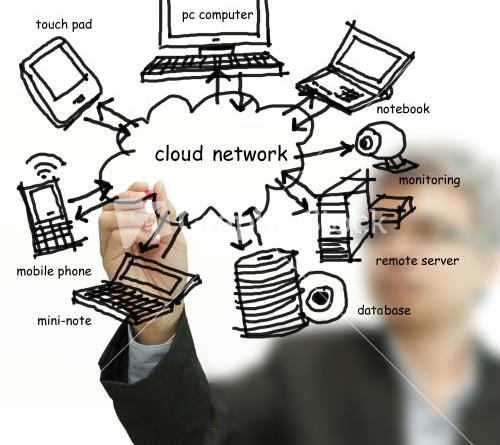
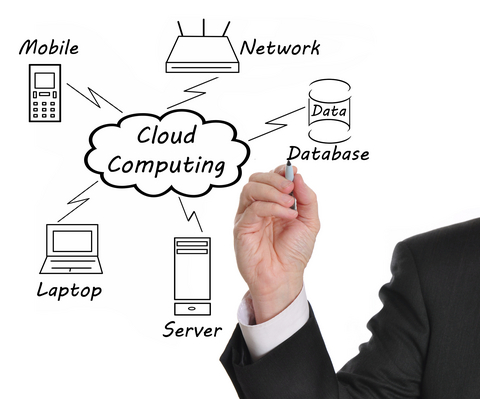
Cloud computing is a scalable platform that is used for the delivery of a service or a capability, to build and run applications over the network. It refers to the IT services that are deconstructed from the underlying infrastructure, and provisioned when needed as well as providing infinite resources to meet the growing demands. It entrusts remote services to the user’s data via computing and networking. The user’s data is stored in a remote location, whereas the end client can access the application through a web browser or a simple mobile app.

Cloud computing fundamentally changes the way IT services are delivered to clients. IT sectors need not concentrate on developing a separate hardware and software encrusted infrastructure for all their servers and storage devices. This would mean that the companies also need to upgrade their servers based on the changing trends. This facility of cloud computing requires neither ownership nor installation of dedicated resources. Cloud computing offers a wide array of benefits:

Reduced cost: Reduction in the cost is definitely an added advantage to any data center operative. The organization would have to invest only in the required capacity and not on unnecessary infrastructure and maximum capacity.

Flexibility: A data center always needs to forecast its future requirements. It needs to be well equipped to situations of migration and need of excess workload. Cloud computing eliminates these undesirable consequences.

Location independence: As cloud computing does not use a physical infrastructure, users can access any application irrespective of their location or the device they are using.

Scalability: A major problem that data centers incur is the expansion plan. Cloud computing offers “on demand” services without having to look for onsite resources.

Security: Access to the log audits is very difficult, hence ensuring security to the data stored. Since the data is distributed over a widespread area and relying on multi-tenants, concern over data loss is relatively minimized.

Maintenance: Maintenance of cloud computing applications is simpler as it does not involve installing applications on every user’s device. It can be accessed from any location.

Server virtualization refers to the servers and data storage devices that are simulated using software. It is the division or segregation of servers. Every single virtual server runs on its own and as a part of another physical server. Many virtual servers can run on a single physical server. These virtual servers can be isolated and can be handled singly, even away from the physical servers.

Through virtualization, you can install a software only once and be rest assured that everyone will have access to it. You don’t need multiple licences to make the software available to all your employees. Since you are technically installing it only on one system, you are not violating any laws either. Same is true with storage. This technique avoids the need for data replication, thus saving storage space.

Virtualization can bring higher utilization, better security and easier management.

Server utilization can definitely bring in some great amount of flexibility and energy efficiency into data centers.

Data Center Talk updates its resources everyday. Visit us to know of the latest technology and standards from the data center world.

Please leave your views and comments on DCT Forum

Share on TwitterSubmit to StumbleUpon

Google Builds ‘Infrastructure as a Service Platform’ for the Cloud

Recent industry reports are suggesting that internet mogul Google is planning to build an Infrastructure as a service cloud computing platform in the near future. It is possible that this service could be launched as early as the next week.

GigaOM which is a news site reported that the industry is buzzing about Google’s plans and that they will also offer the infamous search engine and storage facility along with the service. This platform is all set to compete with Amazon’s EC2 cloud service, but it could also be at loggerheads with a similar service offered by Microsoft.

It is no secret that both Microsoft and Google have their respective Software suites in the cloud, but according to sources, moving into the infrastructure as a service territory will provide a significant financial boost to the companies.

According to GigaOM, Google’s main target is actually Microsoft and its developer community. “The enterprise developer community is also one of Microsoft’s biggest strengths, and Google wants to go after them,” GigaOM writes. “In order to lure these enterprise developers, the company has focused heavily on making it easier to write, deploy and manage applications on its platform.”

Presently, Google has not released a statement regarding this news and its spokesperson said the company is not commenting on rumor or speculation.

Data Center Talk updates its resources everyday. Visit us to know of the latest technology and standards from the data center world.

Please leave your views and comments on DCT Forum

Share on TwitterSubmit to StumbleUpon

CloudProtect – A Unique Service Launched By Insurance Broker, Marsh

As per recent reports, insurance broker Marsh has launched a Cyber policy enhancement which is designed to provide protection against losses incurred from failure by cloud service providers. The service is an add-on to the company’s cyber policy and is specifically aimed at the client’s dependence on the vendors across the wide range of operations.

“Cloud computing enables much more efficient computing by centralizing storage, memory, processing and bandwidth—but it also can lead to network interruptions and lost income should the cloud go down,” says Robert Parisi, Marsh’s network security and privacy practice leader.

CloudProtect solution works to mitigate the risk by offering protection that are not helps to mitigate this risk by offering additional protections that are not sufficiently covered by traditional Cyber insurance policies, says Parisi.

The best feature of the service is that the policy is customizable. Marsh says the policy covers costs associated with procuring services from a new cloud provider as well as the costs involved in transitioning to the new provider.

Marsh says the need for such coverage is growing. Citing a Cisco survey of 1,300 IT executives from 13 countries, the broker says it is estimated that by the end of the year, 20 percent of companies will be using cloud-computing technology to deliver the majority of the software applications they use in their businesses.

Parisi says Marsh is working with leading Cyber underwriters on this program and that limits on policies currently go up to $5 million in capacity in the primary market, with limited additional capacity in the excess markets.

CloudProtect, he notes, will not be attractive to large organizations until the market for the coverage broadens to provide more than $100 million in loss protection. The program is currently “relevant to small and midsize companies (under $2 billion in revenue), which rely more heavily upon cloud vendors and [so] would suffer a more severe loss—relatively—than a larger company might,” he adds.

Data Center Talk updates its resources every day. Visit us to know of the latest technology and standards from the data center world.Please leave your views and comments on DCT Forum

Share on TwitterSubmit to StumbleUpon

National Kidney Registry Goes ‘Cloud’- Breakthrough Event Will Save More Lives

According to latest industry reports, The National Kidney Registry’s new SMELAC matching system has been successfully migrated to Microsoft’s Windows Azure cloud computing platform. It now boasts of a speedy paired exchange match processing. The announcement was made at the American Transplant Congress in Boston last night at the 4th Annual National Kidney Registry Awards Event by Garet Hil, CEO of the National Kidney Registry, and Wes Anderson, Microsoft’s Vice President of Public Sector Services.

Windows Azure cloud computing platform has significantly increased the National Kidney Registry’s matching capacity by 400% allowing multiple match runs to execute simultaneously. This event has allowed the registry to facilitate a larger amount of pair exchange transplants.

Mr. Wes Anderson, Vice President for U.S. Public Sector Services at Microsoft, said, “The National Kidney Registry team realized early-on that scaling their success in kidney matching requires variable computing capability that may grow exponentially at very short notice, presenting important conditions for moving back-end processes to a cloud-based solution. By fully leveraging Windows Azure, the National Kidney Registry is continuing its amazing work of helping to provide a long and normal life for the ultimate benefactors of this endeavor — those among us who need the help of the community to overcome end-stage renal disease.”

Mr. Hil added, “Microsoft continues to provide valuable technical support as we continue to grow our program. The migration to Azure is the latest advance that is allowing our computing capacity to scale up as our pool of incompatible pairs expands.”

Expanding on the importance of this latest technology advance, Dr. Marc Melcher, transplant surgeon at Stanford University and Research Director for National Kidney Registry, said, “More and more transplant centers are using kidney paired exchange transplantation to help their patients in kidney failure, and the computational power required to support the sophisticated matching algorithms that sift through and evaluate all the potential matches has been growing exponentially.”

Data Center Talk updates its resources everyday. Visit us to know of the latest technology and standards from the data center world.

Please leave your views and comments on DCT Forum.

Share on TwitterSubmit to StumbleUpon

“SMBs Get the Maximum Benefits by Opting for Cloud Based Services”-Survey

The main goal of Small & Medium Businesses (SMBs) is to always improve their business operation in the most cost effective way possible. But the newer technologies are usually out of reach for these companies due to financial and staff constraints. Cloud based solutions has changed this notion dramatically. Cloud has made the various applications cost effective and reliable

Recent studies have shown that could technologies are helping small businesses not only in making servers more dependable but helping them to prepare for disaster.

According to 2012 SMB Disaster Preparedness Survey by Symantec Corp, the adoption of technologies like cloud computing, virtualization and mobility is assisting companies to improve their ability to recover from a disaster.

The survey found that more than 40 percent of SMBs are deploying public cloud in their operation while 43 percent using private clouds. Also these businesses are using mobiles and tablets for official purposes.

“Today’s SMBs are in a unique position to embrace new technologies that not only provide a competitive edge, but also allow them to improve their ability to recover from a disaster while protecting the information that their businesses depend on,” said Steve of worldwide marketing for SMB and Cloud at Symantec Corp. “SMBs cannot afford lengthy downtime so the ability to quickly recover from a disaster is critical. Technologies such as virtualization, cloud computing, and mobility, combined with a sound plan and comprehensive security and data protection solutions, enable SMBs to better prepare for and quickly recover from potential disasters such as floods or fires, as well as lost or stolen mobile devices and laptops.”

Mobile processing has made various business processes a breeze. This technology saves business costs in case of disasters or if there is a break in the application as well.

Data Center Talk updates its resources every day. Visit us to know of the latest technology and standards from the data center world.
Please leave your views and comments on DCT Forum

Share on TwitterSubmit to StumbleUpon

Arsalon Technologies Plans to Expand Their Data Center to Meet Demands

Arsalon Technologies recently announced opening of Phase two of their Lenexa data center because of the increasing demand of cloud hosting solutions and IT outsourcing. The Arsalon hosting facility expansion will be made available for clients and will create up to 25 new positions.

Data centers for the companies have become a way to avoid high costs which occur due of managing own hosting facilities. Arsalon’s services are giving the clients the ability to do a smooth transition from their current infrastructure to cloud computing.

Arsalon’s expansion plan involves the installation of two-1.5MW Cummins generators with paralleling switch gears and redundant chillers, A/C units and UPS units. The project planning and construction is headed by Rand Construction, a national expert in critical facilities. Also on the team are Burns & McDonnell and Heartland Electric.

“The demand for high quality data center infrastructure and enterprise class hosting services has continued to be strong,” said Arsalon CEO, Gary Hall. “Our clients require scalable power and bandwidth. They need a reliable solution for their IT operations and we help them do it in a capital-efficient way. Our track record of continual growth over the past ten years reflects our ability to problem solve and consistently provide innovative, secure hosting solutions for our new and current client base.”

The new data center is conveniently situated in Kansas City, has an abundant supply of power and internet connectivity and is looking forward to attract regional companies to create high skilled job opportunities over the next 24 months.

Data Center Talk updates its resources every day. Visit us to know of the latest technology and standards from the data center world.
Please leave your views and comments on DCT Forum

Share on TwitterSubmit to StumbleUpon

Cloud Guidance to Reach All Irish Businesses Looking to Move to Cloud Computing

As per latest reports, the Government of Ireland has launched new standards aimed at providing guidance to businesses on moving to cloud computing. The Department of Enterprise and Jobs said yesterday that cloud services were reshaping the future of computing “but one of the primary concerns with the emerging cloud paradigm is the lack of standards to guide its adoption and implementation”.

The National Standards Authority of Ireland along with the Irish Internet Association launched new standards entitled, SWiFT 10: Adopting the Cloud – Decision Support for Cloud Computing. These standards are aimed to offer direction and supervision to both large and small businesses who require cloud assistance..

Minister for Innovation Richard Bruton said: “A central part of the Government’s plan for jobs and growth is targeting key sectors where Ireland has competitive advantages and the potential to foster growth. One such sector is cloud computing, and various studies have reported that Ireland has potential to create high levels of growth and jobs in this sector if we move early.

“The launch of new Government-backed standards to help guide businesses of all sizes that are looking to move to the cloud marks the delivery of one of these measures.” He added: “This is an important move by Government to help increase the numbers of Irish businesses, small and large, who successfully adopt the cloud.”

Data Center Talk updates its resources every day. Visit us to know of the latest technology and standards from the data center world.
Please leave your views and comments on DCT Forum

Share on TwitterSubmit to StumbleUpon