ASUS IS ALL SET TO BUILD THREE MORE CLOUD DATA CENTERS BY 2013

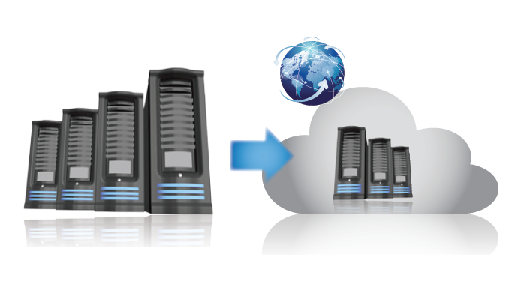
Asus has announced that it has planned to establish three more cloud data centers by the end of 2013. This plan by Asus is to meet the rising demands of the users for cloud services.

On Friday, in an interview to the Central News Agency , Andy Huang, a director at Asus Cloud mentioned that Asus has three cloud data centers in the regions of Taipei, Taiwan, Shanghai, China, and Los Angeles. These cloud data centers provide cloud services to about 10 million users worldwide. This facility is called the Asus Cloud. Asus Cloud is a subsidiary of Asus.

Over the last two years Asus has experienced a substantial increase in the number of cloud users. There has also been a rising demand for their cloud services considering the amount of data stored in them. Yuang explained that the new three data centers would be able to cater to this growing demand.

Huang said Asus will add the new data centers in northern China, eastern United States, and Europe. “Negotiations are underway, and possible locations in consideration are Chinese cities Tianjin, Harbin and Chongqing, Boston in the U.S., and Frankfurt, Amsterdam and Ireland in Europe”, he added.

The Director mentioned that the cloud services of Asus may break by the end of this year. The company is expecting a huge rise in the revenues over the next two years.

“Asus Cloud is currently working with six local universities in Taiwan to develop various cloud services for commercialization in Asia-Pacific”, he added.

Data Center Talk updates its resources everyday. Visit us to know of the latest technology and standards from the data center world.

Please leave your views and comments on DCT Forum


Share on TwitterSubmit to StumbleUpon

London 2012 to Go Cloud Friendly

The Chief Information Officer of the London Organizing Committee of the Olympic and Paralympics Games (LOCOG), the organizing committee for this summer’s Olympic and Paralympics Games, has said that the “rise of the Smartphone” will influence The Games. Much of what LOCOG has learned from London 2012 can also be passed on to organizers at Rio De Janeiro 2016, including some of the software, said Jerry Pennell, also predicting that cloud computing will have a key-role to play in future Olympics.

 “Economically, it will make a lot of sense for the Olympics to be a cloud operation, but the infrastructure hasn’t matured sufficiently yet,” said Pennell.

“We’ve certainly learnt a lot about where the consumer technology is moving; especially smart phones and what that means is developing mobile infrastructure and investments in Wi-Fi. Specifically in terms of legacy, there’s quite a lot at stake. It’s the first time ever that converged telephone network has been rolled out; I think that this will become the baseline for the games in the future.”

On the software side, a lot of the results are new for London and that will be part of the legacy to the next Olympic Games, he said. “Some of the stuff we’ve been using internally on the applications side in terms of information and the ability to have it on your own PC for journalists, applications for mobile phones, all these things will set the standards for all future games based on requirements.” Said Mr.  Pennell.


Data Center Talk updates its resources everyday. Visit us to know of the latest technology and standards from the data center world.

Please leave your views and comments on DCT Forum

Share on TwitterSubmit to StumbleUpon

Calling out the Cloudwashers

cloudbuy cheap viagra canada

pg” alt=”" width=”300″ height=”208″ />Over the past year, the term “cloud” has become such an overused term to the point that when placed in the description of any type of technological product, it causes the masses to flock for purchasing. This practice has become widespread to the point that the industry has coined the term “cloudwashing” for when a product improperly adopts the cloud label.

Additionally, cloud technology company Apprio held the first ever Washies which is an award focused on calling out the worst cloudwashing offenders. After a public vote during November, the results have been announced and the results are unsurprisingly fitting for the industry.

The Washers

  • The biggest overall washer – Oracle: for their Extralogic box. Essentially a hardware/software device to “provide cloud infrastructure in one stop.” In reality the system is simply a glorified mainframe with all the required software pre-configured.
  • The worst case of cloud advertising – Microsoft: for their “To the cloud!” Television ad series which illustrates consumers and professionals in various dire circumstances, then finding the solution in “the cloud” which as shown in the commercials simply the internet. In particular the main commercial is the one starring two customers stuck in an airport.
    It should be noted that Microsoft still has plenty of valid cloud offerings, such as their Azure platform and this award was issued purely for their horrible ad campaign.
  • The most cloud washed statement - Larry Ellison (CEO of Oracle) and Oracle: for proclaiming that “…we’ve redefined cloud computing to include everything that we already do.” A statement well said considering how the Oracle Extralogic box is essentially a mainframe with the cloud sticker stuck right on it.
  • The biggest personal cloud washer - Larry Ellison: for launching a social media campaign just to win The Washies, and also creating a bot to vote for him in the polls.
  • The most enthusiastic use for the word cloud – Salesforce.com: Unsurprisingly to many in the business world, “overusing” does little justice to describe the use of “cloud” in the SalesForce family. This award however is not meant to bash their products but rather the marketing campaigns from Salesforce which rarely go for more than a few sentences without saying “cloud.”

For more quality articles, visit DataCenterTalk

Share on TwitterSubmit to StumbleUpon

Data Center Budget Review


Budget, in simple words, is a trade-off between two or more goods. It is an organizational plan stated in fiscal terms. Like in IT companies, data centers also have its unique priority of reviewing the crucial areas for the year ahead.

According to experts who manoeuvre in and around the data center market, suggest tracking a standard integrated design for the data center. This enables a data center supervisor to realize where outcomes can be expanded. It also helps him understand where added profits can be gained. Every data center has its own special requests, many of which are determined by a number of aspects that plainly cannot be legislated for. The consequence being, there can be no sole approach for data center best custom. The only way to accomplish both efficiencies and administer budgets most effectively is to run the center on an entity item basis. Many data center managers can manage their services in offices or even in an aisle basis, although a few can emphasize control on a rack by rack foundation. Hardly anyone can scrutinize and direct the eminence of individual pieces of tools, and that is why barely any are even close to proficiency.

There are many areas for budgeting in data center:

  • Cut down needless kit tool: Usually data centers have hundreds of aisles. Each of them comprised of numerous cabinets, inside each of which are dozens of sections of IT equipment. A first-rate data center manager needs to ensure that they are not exceeding budget  by having needless kits cool, abounding with power and maintained, or executing a distinct environmental loom which impacts on some substance recital.
  • Maintenance is a must – for instance spending money on security is one of those things that would cause discomfort to the data center managers. A lot is spent on the insurance, as it doesn’t give you more transportation to cater to customers. It offers zero business return and it just seems to be a waste of time and funds especially when things are going smooth. However, when luck fails and a server or backup generator fails because of low maintenance we quickly realize the benefits of safeguarding. The valuable information that is lost is pretty outraging. Before the realization dawns regarding maintenance cost that would likely have prevented the failure, it would be too late. Let budget mirror the significance of a smoothly running data center. Get rid of ample room for maintenance, whether using internal or contracted personnel. Much of preservation is a matter of working time rather than business funds, but if time is valued, one should assign a practical portion of fiscal pie to safeguard data center operations perfectly and efficiently.
  • Energy consumption-On operating a data center, utility bills must be looked in regularly. Keeping a track of these would help analyze the budget every year. This will save all the time which would be wasted in looking into each of them individually over each time period. With the cost of energy rising (apt through a mixture of inflation and increasing demand) and demand for IT services on the rise in general, one ought to plan to spend more funds to service company. Some steps however may be taken to increase energy efficiency and which thereby take a bite out of cost increases. With each passing year wise measures must be taken to conserve. Just like most companies, expanding IT infrastructure will however bite into higher operating costs along with growth.
  • Payment for secure IT resources -regrettably, people are out to get data center. It is indeed unfortunate that money must be spent to protect them from nasty parties. Data center budget must mirror the meaning of security to keep service running. With that, protecting the customers’ data must be a top priority. There’s no solo fix for the entire security nuisance: it’s a fragmentary conflict and is complicated in response to better security measures. The budget should always deal out satisfactory funds to both implement and preserve the necessary security measures: anti-virus, firewalls, anti-malware and site security, for example. At high profile companies highly sensitive information needs great security. This means greater leeway must be given when data center budgeting is in progress. Even if the company is not so high profile, ample care must be given to it. When highly confidential information is read out by a stranger or a third person it’s important to protect it from theft and fraudulent of information.
  • Concentrate on cloud- components flaunt their apparent benefits, such as condensed capital expenses and overall cost savings. There is always a raising doubt about if by switching to cloud costs can be reduced. However a lot of companies can profit by relying on the cloud to some extent (In the sense some level of cloud use between complete reliance on domestic IT and absolute outsourcing to the cloud). A wide variety of cloud services are accessible, and wholesale could be ignored.  Using cloud storage for a section of data, for instance. While data center budgeting, assumptions of cost saving by using cloud must be discounted. A modest leeway for initial costs, the learning curve and so on.

Data Center Talk updates its resources everyday. Visit us to know of the latest technology and standards from the data center world.

Please leave your views and comments on DCT Forum.

Share on TwitterSubmit to StumbleUpon

Advantages of Cloud Based Network Test System

Cloud-based networking solutions are services that establish cost efficiency and scalability benefits to the networking sphere. It is a system where software programs and storage space can be accessed through the Internet. Hence companies use this service to outsource the ownership and management of certain areas of its IT functionality like storage, mail room, web sites, etc within the cloud. Users may not be aware of what software or hardware is being used or what operating system it is running on, but they do not need to. It is similar to software as a service (SaaS) in the market. This is also an enterprise application. Multi-tenant architecture based SaaS applications like SalesforceTM has changed the status quo in the Customer Relationship Management space. Cloud-based networking has brought about the same upheaval in the networking space.

Cloud-based networking has created waves in the internet sphere. It is an innovative way to roll out distributed venture networks that convey enterprise-class network capabilities around the world. The process is carried out via vastly resilient, multi-tenant applications that involve no principal investment in networking equipment. Unlike conventional hardware-based solutions, cloud-based networking is extremely simple, enabling enterprises to install remote locations in less time and operate their distributed networks through a cloud-based application. It also provides unique levels of centralized control and network visibility. Such services are also subscription based which the users can opt.

The two major features of the cloud computing are:
(i) It is modular and it compartmentalizes software applications ,associated hardware and the infrastructure
(ii) It is uniform and utilizes the same possessions that clients share. A business using cloud computing can keep away from large outlays of capital expense as well as everlasting maintenance costs. This results in the cash flow with total system cost.

Apart from the above mentioned, there are other benefits to cloud computing. The major one being it supporting data centers in every aspect. Data centers can at times be too bunched up for comfort. Virtualizing the servers has met with only limited triumph. Over time, there will be a smooth transition to measurable computing, based on the cloud. The future of computing is going to be a blend of service orientation, service management, and cloud computing. Some of the reasons being -

• Customers can access applications and data from anywhere at any time through the internet. Data will be stored offsite rather than being stored on a hard drive of a user’s computer or a corporation’s internal network.

• Another important aspect is that the hardware costs would decline as cloud computing systems would lessen the need for advanced, expensive hardware on the client side. The cost of buying, installing and supporting a system network will dramatically decline.

• The need for expensive memory or even large hard drives is undesirable. Rather, everyone would buy an reasonably priced computer terminal, a monitor, input components such as a keyboard and mouse, and only enough processing power to run the middleware essential to connect to the cloud system. Computer components have to be purchased in large quantities in IT. But buying hardware in large volume, cloud suppliers get better pricing on each purchase.

Cloud computing is a subscription based system. Enterprises would not have to buy software or software licenses for each employee in the company. Instead, the company would pay for what they use. It is more like the way an open source software functions. In a broader sense, cloud computing infrastructures are fabricated from open source components as the cloud providers are uncertain to make huge investments without knowing the outcome.

When cloud computing system’s back end is a grid computing system, customers could make optimum use of the entire network’s processing power. For example, researchers who work with extremely complicated computation can dispatch the computation to the cloud for processing purpose. The cloud system would make use of the processing power of all available computers on the back end and considerably speed up the results. Cloud computing offers a way to outsource non-critical applications to business. It also results in better performance, allowing IT to hub on critical applications.

Another advantage of using Cloud computing is the usage of man power. Cloud providers are more resourceful at IT operations, using fewer man-hours for criterion tasks.

Share on TwitterSubmit to StumbleUpon

Gear up with the Season’s Latest Trend- Cloud Computing

Cloud computing, in simple words, is like an allegory for the internet.  It is a subscription-based service where one can obtain networked storage space and computer resources that include all the components of a network.

For better understanding, one could think of cloud computing when chatting over the internet. Consider Google chat or Skype, for instance. These applications house the hardware and software essentials in their data centers to create and use a personal chat account. When one wants to access chat, appropriate web browser is opened and the user is asked to sign in. The key part of the process is to have internet access. Chat is never housed on physical computer; it is accessed over an internet connection, and can be accessed from any corner of the world as long as one has access to the internet.  Cloud computing also works along these lines. One can access any information stored in the server as long as one can connect to the internet. One can pull out five year old business reports, alter it, use it and even build on it. This, of course, needs security clearance. Even though cloud allows mobility, one needs to follow the specified security protocols.

Conventionally, computers which acted as   data storage devices would usually be grounded in one room. Access to information while on the move would be a task like no other. The cloud, fortunately, doesn’t entail such drawbacks. The cloud eliminates the need to be in the same locality as the hardware which stores data. A cloud provider can own as well as house the hardware plus the software necessary to run both, home or business applications. The cloud enables its users to access information from anywhere at any given time. Cloud computing entrusts services which is essentially centralized with that of a user’s data, software and computation on a published application programming interface (API) over a network.

There are different types of clouds that one can subscribe to depending on the requirement. As a home user or small business owner, most people are likely to use public cloud services.

  • Public Cloud – A public cloud can be accessed by any subscriber who has an internet connection and an access to the cloud space.
  • Private Cloud – A private cloud is accessible to just a specific group or organization and restricts access to everyone else.
  • Community Cloud – A community cloud is pooled among two or more organizations which have similar cloud requests.
  • Hybrid Cloud – A hybrid cloud is fundamentally an amalgamation of at least two clouds where the clouds included are a mix of public or private organization, or a community.

The sole purpose of having cloud computing boils down to saving a lot of effort and money one would spend on while installing and maintaining compound hardware and applications. Cloud provides the same services on a pay-as- you-go basis. Businesses do not always generate their own resources– utilities are bought when required. The same holds good for the essential IT services that can be managed better on the exterior.

Users can access cloud computing through networked client devices, such as desktops, laptops, tablets or even smart phones. Most cloud clients depend on cloud computing for all the frequent use of their applications. Most cloud applications do not need explicit software and instead need a web browser to access the cloud application. Some of the bequest applications are delivered through a screen-sharing technology.  Today, for the major part, IT has to plug into cloud-based services individually, but cloud computing aggregators and integrators are already up-and-coming.

In the present day, there are scores of vendors that offer cloud services. The services offered by these vendors depend upon the facilities as well as the pricing models provided by them. Some of the earliest vendors included Amazon which offered sophisticated services followed by Google and Microsoft.

To sum up, the cloud provides numerous options for the everyday computer user as well as to the large and small businesses. It provides a wide variety of computing and enhances the usability by providing access through any internet connection. However, this increased ease also comes with a flipside. The users have less control over who can access the data and where it is stored. Users also must be aware of the security risks of having data stored over cloud because anyone could   access the cloud through unsecured connections. The best way to keep it safe is by understanding the terms and conditions of the cloud provider and the system itself.

Data Center Talk updates its resources everyday. Visit us to know of the latest technology and standards from the data center world.

Please leave your views and comments on DCT Forum.

Share on TwitterSubmit to StumbleUpon

Is Virtualization the Same as Cloud?

It is very common to confuse cloud computing with virtualization. Since they are both relatively new and since organizations are calling it the saving face of new age technology, I assumed we might want to look into what exactly the two technologies are and how diverse they are from each other.

Cloud is essentially a highly scalable platform where you can store data, build and run applications that can be accessed through the internet only. Cloud is a mode to mobilize all applications so that you can remotely access your organization data through any device that has access to internet. Data center hosts or collocation hosts who are interested in cloud technology provide software as a service packages to their clients. Cloud makes it possible to have your servers in a secure environment in any part of the world and your clients still can access and modify the data if they have required security clearance. Cloud makes use of virtualized resources in order to fulfill its requirements. A cloud host provides hardware and hosting facilities depending on the usage requested by the client.

Virtualization, on the other hand, is a technique of creating a virtual pool of servers, operating systems, storage devices and network resources. It enables a single user to access multiple physical devices at the same time. With this, one operating system can control the operation of multiple computers or vice versa.

Building your own data center takes a lot of capital investment; and maintaining it is a nightmare you do not want to go through if your main aim is to focus on your business. Hiring a service is a better option. Unlike the cloud, in a data center, you have to note that you will merely be storing your servers on someone else’s property. So you are responsible for upgrading your servers as and when technology takes a giant leap. The drawback with data centers is the challenge you will face while scaling up as and when the need arises. Your data center host must have rack space to accommodate an extra server or two and also must be equipped to handle an increase in cooling and power needs. Of course, there is a problem of your resources going on standby mode when not in use, too. Cloud may be an ideal solution from an economic point of view. Like we have mentioned before, you only pay for the services you are using; not for idle or standby services.

Virtualization is all about the control. Pure, unparalleled control over multiple devices using a single point of operation. With virtualization, for instance, you can run a very large application even though your system individually cannot support it. In other words, your system interacts with the other systems connected to the virtualization network, notes which system is available and uses part of the available system’s resources in addition to your own to run your application. It’s like your system has temporarily expanded its capacity to run your application successfully.

Through virtualization, you can install a software only once and be rest assured that everyone will have access to it. You don’t need multiple licences to make the software available to all your employees. Since you are technically installing it only on one system, you are not violating any laws either. Same is true with storage. This technique avoids the need for data replication, thus saving storage space.

So you see, one technology has nothing to do with the other; and they, most certainly, are not the same thing. Virtualization, to an extent, makes the cloud operable.


Data Center Talk updates its resources everyday. Visit us to know of the latest technology and standards from the data center world.

Please leave your views and comments on DCT Forum.

Share on TwitterSubmit to StumbleUpon

Bringing Fanatical Support to your Premises

In the past, having a private cloud typically meant you had offsite hardware managed by a host, or a full-time IT team on hand to handle on premise hardware, however thanks to Rackspace companies are now able to have the security of an on-premise private cloud while receiving the industry leading support and guidance of Rackspace Cloud Builders.  By providing customers with the option of utilizing:  Rackspace datacenters, partner datacenters, or most commonly a customer chosen data center, Racksapce is now moving from being a traditional web host to an on-call IT support firm.

While the change from a controlled environment to “real world” setups might sound daunting, an interview with Scott Sanchez, Director of Business Development for Rackspace Cloud Builders, greatly helped to clarify the many questions enterprises and information technology professionals have had about the major initiative from the vendor.

Bringing the Cloud to You

  • Although Open Stack can technically run on a wide array of hardware, to qualify for Rackspace support, your servers  must conform to the specifications at ReferenceArchitecture.org
    • The requirements at Reference Architecture are intended to ensure a reasonably standard environment for Rackspace clients regardless of server location
    • The main objective of Rackspaces’ Open Stack is to provide the same level of support to Rackspace clients regardless of where their servers are located.
      • Rackspace Cloud Builders allows Rackspace to help assemble the necessary hardware on your premises, while also handling management tasks remotely
      • When asked about the transition to supporting both controlled and outside environments rather than just their own data centers, Sanchez said it has not been an issue due to the  publication of standardized required specifications
      • According to Sanchez, although Open Stack can be used by smaller companies looking to test their own private environments, the ideal demographic is larger companies with significant infrastructure investment

Proven Track Record

  • Despite Open Stack only being sixteen months old, it has been adopted by computing giants such as:  Sony and their PS3 Network, PayPals’ X Commerce Platform, and The European Organization for Nuclear Research (CERN)
  • Additionally, Open Stack boasts a development network of over 130 participating companies and over 150 developers
  • Interestingly, Sanchez mentioned that many of the major corporate users of Open Stack devote some of their development efforts towards contributing back to the  open stack community as new features are added and improvements are made
  • This model does not just benefit the community at large, but enterprises also benefit since their contributions help shape the project. Additionally it prevents them from being at the mercy of a single company for development direction.

Development Cycle

  • Open Stack operates on a six month development cycle which is based on clearly marked milestones, helping to simplify the logistics of knowing how an update will affect the existing systems
  • Although having a six month deployment cycle has been of concern to many, Sanchez mentioned that with the Diablo release (latest version) of the software, the foundation has become much more solid than the earlier phases
    • Analogous to building a house. It takes awhile for the foundation to solidify before you can begin branching out and adding additional features.
    • In addition to starting with a full deployment, Sanchez mentioned that some companies who are concerned about the early stages of Open Stack simply start with the latest version, but don’t go to production until later versions come out
    • Unlike many Linux distros which have bleeding edge, stable, and legacy version support, Open Stack only maintains their latest editions allowing them to focus on the present rather than having to support various variants of the platform
      • When asked if Rackspace has any plans to adopt a deployment cycle similar to Linux distro’s, Sanchez said there are no plans to change the model as it is already sufficient.

      For more quality articles visit DataCenterTalk

Share on TwitterSubmit to StumbleUpon

Why Need Infrastructure Service in Cloud ( IaaS)

Anything that entails distribution and delivering of hosted services over the internet is regarded as Cloud computing.

IT spending has always been disruptive since many years. With cloud computing coming in, it is seen as a viable solution as it ranges from cloud hosting to IT infrastructure services. It involves a consumer, provider and also a broker. Adoption of cloud computing varies across all segments based on the usability, service and also depending on the size of the organization making use of it.

Amazon Web Services holds the largest public cloud services; that means you can either get cloud services from a public cloud service provider or you can own a private cloud hosting a proprietary network or by using a data center in case of a small group of people. A virtual private cloud can also be created if a service provider uses a public cloud to recreate a private cloud.

They are mainly classified as Infrastructure as a service (IaaS), Platform as a Service (PaaS) and lastly Software as a service). Cloud (IaaS) hosting differs with traditional hosting in three distinctive features; it enables scalable and elastic information technology related competences, it can be personalized as based on the requirement at any point of time and it is maintained entirely by the provider. All you need is just a computer and internet access.  A considerable advancement in virtualization and distributed computing, a disruptive industry and cost cutting agendas has added to more speculation and interest in cloud computing. Most commonly scribed benefits associated to Cloud (IaaS) are faster deployment rate, specified access, lesser IT staff adding to more savings on expenditure and most common attribution being it way ahead. Business directors discern that regardless of the benefits of every new tools or business models, there are also threats and concerns like reliance, identity theft, authoritarian infringement, data imitation, copying and duplication, application collapse, and enslavement among others. Consequently they apprehend that quickening things concerning Cloud Computing can be a very terrible decision. On the other hand, paying no attention to Cloud Computing entirely, because a belief in your capability to secure your own setting better than a service provider ever could, before getting into it because the many assertions made about Cloud Computing have led you to the point of “illogical and unreasonable excitement” and impractical hope. It isn’t smart either to think Cloud Infrastructure as a service completely relies on the provider but needs more transparency in getting the services. A customer can have the liberty to spotlight on the dexterity it provides, an alternative of speckled payments at apt times and intelligibility in value based costing.

It provides the freedom to focus on delivery for the provider. Cloud (IaaS) gives a lot of power, bigger customers list, enhanced profit precincts and a restricted consultation to the provider.

The biggest drawback is that cloud (IaaS) comes without assurance and warranty for a client but it becomes more of a nonspecific service, has limited deals and comes with no endorsement and completely no addition for a provider.

For more please visit www.datacentertalk.com

Share on TwitterSubmit to StumbleUpon

Key Trends Shaping the Future of Data Center Infrastructure Through 2011

A recent survey conducted by Gartner addressing the key challenges faced by large enterprises when it comes to their data centers. The survey revealed that data growth was the biggest hardware infrastructure issue faced by these organizations followed closely by system performance and scalability and network congestion and connectivity architectures. The survey also explored what technologies the organizations were looking into to tackle the issues, the prime drivers for the change and their long term philosophy to deal with change in the data center industry in general.

WHAT ARE YOUR MAIN HARDWARE INFRASTRUCTURE PROBLEMS?

How companies plan to tackle data growth

Considering that cost containment is a practice that is religiously followed in most organizations, tackling the data growth issue seems to be the logical step as this problem is associated with increased cost with regards to new hardware, supporting software and maintenance etc. To resolve this issue, as many as 62% of the companies are focusing their attention on data archiving and retirement projects. Other projects include data security from internal, external or hacking risks (54%), storage consolidation (53%), storage management tools (52%) and data reduction technique (49%).

How companies plan to scale up their resources to meet the needs

As the recession drew to an end in 2010, the companies started to refocus on growth. They found that the existing resources could not cater to the growing demand and they desperately needed an upgrade or, in some cases, a change in technology itself. Servers with better efficiency and scalability option started to flood the market. To meet the needs of improved server performance, most organizations have now turned to server virtualization. Blade servers are turning out to be the solution to scalability issues.

How companies plan to deal with network related issues

Network congestion and connectivity architecture issues have risen up mainly due to the increased deployment of server consolidation and virtualization projects. Due to virtualization, the input/output demands of the servers have gone up and the local LAN switches are unable to shoulder this sudden surge in network demand. Also, with everyone going mobile, there is a huge load for WAN to handle. The only solution to this is to come up with better networking infrastructure and the companies are investing a huge amount of resources in this field.

WHAT ARE THE DRIVING FACTORS FOR THIS STRATEGIC CHANGE IN THE DATA CENTER?

50 percent of the organization claimed that the key driver for the change in the data centers was business continuity and round the clock availability. Cost containment initiatives came in as a distant second biggest driver for change (37 percent) followed by a close need to improve user services and satisfaction (36 percent). Interestingly, the desire to ‘Go Green’ did not appear even in the top five reasons for change.

The most preferred option to ensure business continuity and availability was server load balancing (62 percent). Considering that server load balancing helps to minimize server response time, improve SLAs and maintain uptime and avoid crashes, it is not difficult to see why companies worldwide are opting for this technology. This was followed by database or file based replication (55 percent) and redesign of backup and recovery (55 percent) with both the technologies acting as a safety net in case of a crash.

The most popular technology to facilitate cost containment initiatives was, as expected, virtualization with 75 percent of the companies preferring this over data reduction techniques (53 percent) or data center management tools (49 percent). It is to be noted that although server virtualization would save on initial capital expenditure, it would lead to more sophisticated network connectivity problems and virtual server sprawl issues. Although cloud services seem to be a solution to cost containment issue without overly taxing the network, most organizations are still reluctant to consider it.

To maintain or improve user services, 60 percent of the organizations reported that they were working on data recovery projects, followed by WAN optimization (51 percent). Coming in third was interest in traffic flow monitoring tools at 49 percent.

WHAT CHANGES IN DATA CENTER DEMOGRAPHICS ARE YOU BRINGING IN?

Apart from the constant challenges the companies are having to face on the data growth, system performance and network connection fronts, they also have to focus their attention on issues like power, cooling and space costs and data center management issues. All these problems have to be dealt with limited capital at their disposal.

When asked what changes/ additions the companies wanted to see made by the end of 2011, about 60 percent of them planned to expand the capacity of their existing data centers. In companies where expanding the capacity of the data centers is an impossibility owing to factors like not being able to afford additional capital expenditure, or not having physical room or sufficient infrastructure in the existing data centers, one- third of them seem to be turning to collocation while another 30 percent of the companies insist on building a new data center.

WHY NOT JUST ADOPT CLOUD?

Although cloud seems to provide a better solution to all the challenges faced by the companies at what seems to be a more reasonable price, organizations are reluctant to completely rely on it. The top ranked challenge among the companies is data growth that can clearly be resolved by the scalable and elastic qualities of the cloud. Performance and scalability being one of the most alluring features of cloud can clearly be addressed by the same. Network congestion can be slightly tricky but if public cloud computing can be used along with public cloud storage, the issue can be resolved.

Despite the needs of the organizations and the benefits of cloud, the management seems to be playing safe by exploring all other options before turning to the cloud. Although the number of enterprises now favoring cloud has increased from last year, the number of organizations still hesitating is significant. It looks like cloud service providers still have a lot of marketing, educating and awareness spreading to do.


For more on data centers, and the current trends shaping them, visit Data Center Talk

Share on TwitterSubmit to StumbleUpon