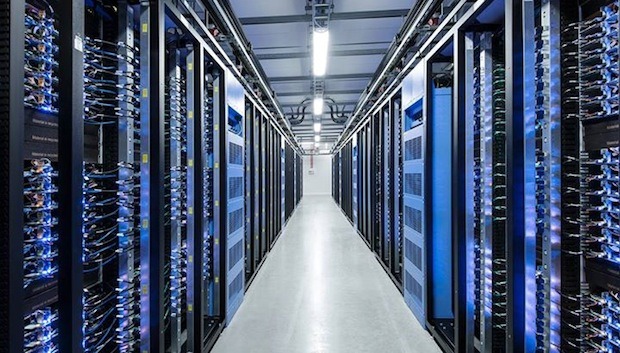
Data Center Efficiencies from the Perspective of the End User

Today, data centers have become the prime targets of environmental agencies because of their supposed incessant use of energy. Hence the need of the hour is to focus more on consolidating data centers and increasing energy efficiency. After controversies surrounding some of the bigwigs of the Internet arena for not being responsible and considerate towards the environment, data centers’ attention mainly revolves around optimizing operations and efficiency. Several parameters define an efficient data center.

Some of the highly efficient data centers include infrastructure such as advanced cooling techniques, high density server racks, rooftop cabling systems, biodegradable energy utilization techniques along with minimum utilization of space. Data center operators strive to implement radical measures to further enhance the efficiency of a data center. The efficiency can be further enhanced by deploying rack optimization techniques, monitoring tools, and virtualization strategies.

Analysis has revealed that there is often an overlooked factor that can apparently take the efficiency of data centers to another level. The factor is “looking at data centers from the end users point of view.”

Relation between a data center and the end user

It is a known fact that any new product or service is delivered keeping in mind the end user and end user satisfaction. Then why leave the end user in darkness when considering the efficiency of data centers? Data center efficiency when built amidst end user’s computing experience creates a more conscientious environment. This is where the idea of ‘user virtualization’ is used. User virtualization is the process of isolating/disconnecting the user from the hardware. With this users can carry all the settings, applications, and profiles regardless of the devices, hardware or even the operating system.

Hence with this new strategy users can have all the applications with them at all times, on any device, and on almost any platform. But what needs to be answered here is that if user virtualization can really create data center and IT administrative efficiency?

BYOD and IT consolidation: BYOD stands for ‘Bring Your Own Device’, and as the name suggests it can reduce the number of resources required within the data center and the IT environment. IT consolidation can further reduce management issues, end to end physical points along with a simplified computing process. User virtualization allows users to carry data from one device to another seamlessly without having to depend on the hardware. All that matters is the end client receiving the data. All of this further translates to fewer moving parts within the IT environment.

Data Center Server Reduction: As most of the servers catering to BYOD are Virtual Machines, there is considerable reduction in the number of physical servers provisioned at the data center level. High density computing can further reduce stand alone rack servers, and create a more efficient environment.

Cloud Computing: With the help of user virtualization it is easy to transfer data to the cloud platform. User settings can easily centralize and controlled at the data center level or within the cloud environment. All settings can be controlled from one management console. User management functions can also be outsourced to the cloud. Hence, resulting in the

reduction of hardware platform and software management tools.

By creating a more robust end-user experience in deploying user virtualization, data center administrators can find themselves working with a new layer of environment efficiencies.

Data Center Talk updates its resources everyday. Visit us to know of the latest technology and standards from the data center world.

Please leave your views and comments on DCT Forum

Share on TwitterSubmit to StumbleUpon

Data center efficiency-Is it size dependent?

Data centers for a long time have taken their own stand when questioned about the efficiency of operations. Some data centers follow the conventional methods of strategy implementation while the others take a different route. For example, Google has adopted custom built servers and batteries, Facebook uses a unique evaporative cooling method to save power, and Yahoo has adopted an outdoor cooling design.

Data centers can be generally divided into two primary classes based on size that is the large data centers and the small data centers. Large data centers have an inherent advantage in implementing energy efficient strategies as they can shift operations to another facility as and when the situation demands. It could be a failure in the data center or an expansion plan adhering to all energy saving norms.

“Large centers can operate at a higher risk of failure with the offset, but smaller data centers can’t do that as easily,” said Fluegeman, who specializes in facilities, power and cooling, and is also the principal engineer with PlanNet Consulting.

“It’s following the sun or the moon, because they can very easily shift their traffic to different locations depending on whether it’s night or day in a particular location,” he said. “Especially if you’re using outside air and free cooling or air-side economy as it’s called, this is a concept that’s used to some degree by larger companies with data centers worldwide, where they shift traffic.”

In the case of smaller data centers (data centers that lack the infrastructure and resources of its larger counterparts) energy efficiency strategy implementation along with reducing costs is a difficult task.

So how does one cope with such a scenario?

According to Fluegeman, three quintessential parameters to be followed by a small data center are-

Design of the IT structure: it is essential to design the data center in a way that it helps in consolidation of the files. For example using file duplication or compression. This would automatically reduce the amount of space required for the storage of files. Enterprises can modify or make alterations to the network configurations from their own data centers as well as allowing the users to access data from anywhere at any time.

“There are ways to architect your system to deal with duplication and keep things lean and mean and trim with good housekeeping,” he said. “This allows data centers to be smaller and greener by using as little power as possible.”

Tiered storage can be used as another remedial measure: with this files are stored in servers, and the servers run on sleep mode. The files can be pulled up or retrieved only when necessary, thus saving a lot of power.

Restructuring the cooling method: It is imperative that small scale enterprise data centers make use of hot and cold aisle containment for data center cooling. This is to ensure that hot air is isolated from the cold air. But the crucial aspect of this design is to keep the hot air from nixing with the cold air. This would create a 30 degree difference in the temperature of the data center, says Fleugeman.

One way is to line up the servers such that the front faces one direction and the exhaust side faces the back. This forms the hot aisle and the cold aisle. Another way of doing this, in case of parallel arrangement of servers is to stack servers with alternate hot and cold aisles. Front faces of two servers face each other while the back faces the front of another line of servers

Use uninterrupted power supply to reduce excessive power costs: The use of the UPS is a radical transformation in the deployment of energy efficient measures. UPS is normally used when there is a power outage, but this can be prove to be an advantage for data centers as UPS wakes up from the sleep mode only when the power fails.

The difference in power drop and the UPS turning back on is so minimal that the equipments fail to pick up the drop in power and continue to operate continuously.

Switching to higher voltage equipments can result in a lot of power savings since it is more efficient and the physical conductors are smaller.

“If you look at power lines on big poles on the hill side, those wires are small- they’re far apart, but the power voltage is very high,” he said. “This is being applied to data centers now. Higher voltage is slightly more dangerous and in the U.S we have a lot more attorneys. That’s what keeps voltage lower, in my personal opinion.”


Data Center Talk updates its resources everyday. Visit us to know of the latest technology and standards from the data center world.

Please leave your views and comments on DCT Forum

Share on TwitterSubmit to StumbleUpon

FACTORS OF MEASUREMENT FOR A GREEN DATA CENTER


Managing a data center efficiently is a tough task. After taking the green plunge too, it is necessary that one measures the efficiency of those buildings.  This is because, to be completely efficient one needs to know at what rate does the data center use up the resources provided, what type of byproducts it is generating and most importantly how green it actually is.

Why fix something that is not broken?

People might take all that poking and prodding to find out the efficiency rate to be an exhaustive process.  But data center managers should remember that measuring certain parameters will help them understand their data center better. Based on these measurements, the managers can opt of upgrades and appropriate resources for the data center. It also helps them assess the success and growth rate accurately. It is shocking to find out that despite of its very important nature, many enterprises completely avoid the process. Surveys of more than 1,500 Data Center owners and operators at Datacenter Dynamics conferences in 2008 indicate that fewer than one in three were using Data Center efficiency metric and fewer than half definitely intended to use them in the future.

But what should we measure?

Now that the importance of measuring the efficiency has bee established, one needs to measure the right parameters so that those can aid in quantifying the impact of the various upgrades which are incorporated to make the data center green. Let us look at those pointers and try to understand why measuring them is important:

Power:

The data center runs on power and that’s what makes it the most important resources which needs measuring. Doing so will answer all queries, and will help one figure out the accurate rate of consumption of energy by the IT equipments, the lighting systems and the Cooling center.

It is pertinent to remember that power consumption is the most expensive operational cost of the data center.  If one measures the exact usage rate of this resource, then they will be able to save energy and capital by making necessary improvements.

Footprint:

Here, it means the carbon footprint. As we all know, carbon traps heat and if this is left unchecked, then it can hamper the temperature balance of the data centers. Carbon emission is largely man-made. This factor needs to be checked out because it has a domino effect on the working of a data center. Think about it, increase in temperature means the cooling units would work harder to maintain the temperature of the data center by consuming more power thereby decreasing the overall efficiency.

Battery rooms:

The generators in the battery room which start up in case of a power failure emit a ton of pollutants including gases like nitrogen oxides, hydrocarbons, carbon monoxide. Measuring and keeping a tab on the power consumption of the generators give a clear picture about the data center’s health report.

Hot air emission:

Hot air comes with the territory but a clear pathway is absolutely essential to make sure that it is disposed properly. This is crucial as this hot air, if left unattended would be re-circulated in the data center thereby increasing the temperature. Measuring the efficiency rate of the cooling units will let one gain insights how effectively is the hot air disposed and also will help them make a better decision in case an upgrade is required.

Water intake:

Needless to say, cooling tower requires gallons of water on a monthly basis and the water used also needs to be replaced.  This measurement has not been seriously considered, but it plays a pivotal role towards determining how green the data center is. Removing gallons of water from the local supplies has a huge impact on the environment on the whole and should not be ignored.

Data Center Talk updates its resources everyday. Visit us to know of the latest technology and standards from the data center world.

Please leave your views and comments on DCT Forum

Share on TwitterSubmit to StumbleUpon

Essentials for Data Center Competence

If you thought shopping for daily amenities was a tough task, then you cannot even comprehend the factors and parameters which are to be considered while choosing a data center. Usually different companies have their own distinctive approach. They take parameters like Energy efficiency, cooling systems and the all important power supply into consideration. With the economic meltdown underway, it has become important to implement solutions which will save energy and moolah. But often, the goal of operating an energy efficient data center can get a little overwhelming to deal with. The reason is, the big data centers can operate with high failure risks when dealing with energy efficient methods as they can shift their operations to another facility in case of a failure, but the small ones cannot afford to mainly due to lack of resources.

So the question is how can these data centers which lack the perks of the large data centers achieve the requirement of being energy efficient data center without compromising on the quality and that too at low costs? Well, the key to this a list of top 3 essential pointers which you should consider while designing a data center which offers efficient performance without loading you up with long bills.

Go Back to Basics:

Industry experts suggest that designing the data center by structuring the different components can help in more efficient energy flow in the data center. Keeping everything organized will largely help you in tasks like data duplication.

Another method of lowering the power use is to implement the tiered storage method .In this method, older data is stored by archiving them in a storage device from where information can be retrieved as and when needed.

Cool the Facility with the Right Tools:

Usually, data center facilities implement the hot aisle/clod aisle method as a cooling strategy. In this method hot and cold air are contained separately. The process to keep these airs separate creates a considerable temperature difference which is sensed by the A/C system. As a result, less energy is consumed to fulfill the cooling needs.

The question which arises here is how to keep this air from mixing. A simple alignment arrangement of the servers in the same direction solves the problem i.e. all the backs of the servers in one direction and all the fronts face one direction thereby creating a hot and cold aisle.

Use Offline Power:

Though it is a controversial process, it is a method which has been repeatedly encouraged by industry experts to try out. The logic is sound. Data centers have UPS for offline power supply in case of a failure. Experts suggest that using the same emergency supply kit to operate the data center can reduce the power consumption considerably. This is because the system is dormant unless there is a power failure. So the power lag between the power outage and the UPS taking control is negligible and that is why the IT equipments don’t even pick up the power drop.

Now, this method completely depends upon the person implementing it. So whether the person is operating it at high or low efficiency, there is a risk factor which includes the safety and the performance of the data center.

Some Other Methods:

Also, minimizing the number of transformers will lower the number of UPS which will elevate the risk factor. But experts state that transformer provides isolation between input and output, which can be achieved with circuit breakers and other tools.

Switching to higher voltage equipment is also believed to offer decent energy savings as these equipments have smaller physical conductors. Though higher voltage is a little dangerous, once implemented, it can do wonders in the field of energy savings.

Data Center Talk updates its resources everyday. Visit us to know of the latest technology and standards from the data center world.

Please leave your views and comments on DCT Forum

Share on TwitterSubmit to StumbleUpon

eBay builds the Largest Clean Energy Project till Date

eBay recently announced its intentions of commiting to clean energy and hence have taken this initiative to a whole new level. According to industry reports, eBay will implement clean energy for its Utah data center. The company plans to use the local power grids for emergency backup power source. eBay has partnered up with Bloom Energy and has installed a 6 megawatt fuel cell installation in the data center campus. This data center is expected to be the largest non –utility fuel cell installation in the country.

It is reported that 30 Bloom Energy servers will be installed in the Utah data center. Each of these servers is capable of producing 1.75 million KWH of electricity annually. The fuel cells are going to be powered by biogas.

“By being a trail blazer and deploying a brand new, revolutionary architecture to build its new data center, eBay is raising the standard for the entire industry. It is 21st century infrastructure for the industry needs of the 21st century,” said KR Sridhar, principal co-founder and CEO of Bloom Energy. “Bloom Energy is thrilled to be supporting eBay on this innovative and inspiring large scale project.”

Bloom Energy operates a 650 kilowatt solar farm along with a 500- kilowatt fuel cell installation at its San Jose headquarters site. Once the eBay project is completed, it will become eBay’s largest renewable project.

Data Center Talk updates its resources everyday. Visit us to know of the latest technology and standards from the data center world.

Please leave your views and comments on DCT Forum

Share on TwitterSubmit to StumbleUpon

Colt partners up with Verne Global-Sets up Services in the Campus

One of UK’s most innovative power-conscious data center campuses, Verne Global recently announced that Colt, which is the information delivery system for various European business has agreed for data center capacity, which is going to be powered by 100% renewable sources. With this move, Colt hopes to create a presence within Verne Global’s data center. Colt is also looking forward to enhance its productivity and its portfolio with 100% carbon-free data center services.

“Colt works very closely with our customers and partners to continually improve sustainability across all of our data center assets and modular data center builds,” said Bernard Geoghegan, Executive Vice President at Colt. “As the market continues to evolve, finding innovative methods to reduce the cost and environmental impact of the data centre industry is of tremendous importance and we believe that Verne Global offers a compelling value proposition to Colt and our customers.”

“Colt is a recognized player in delivering data center services to the marketplace and we are thrilled to have them locate at the Verne Global campus,” said Jeff Monroe, CEO of Verne Global. “It is clear that the industry is responding to Verne Global’s value proposition and we appreciate the trust and partnership of companies like Colt as we continue to expand our customer portfolio.”

As an information delivery platform, Colt enables its clients to deliver, process and store information efficiently. They offer services to major organizations, midsized business and also to wholesale customers. Colt has an impressive network which ranges across 21 countries and include major metropolitan area networks in Europe. In 2010, the Colt Data Centre Services business was launched to deliver innovative high quality modular data centers which are rapid to deploy and power efficient.

Data Center Talk updates its resources everyday. Visit us to know of the latest technology and standards from the data center world.

Please leave your views and comments on DCT Forum

Share on TwitterSubmit to StumbleUpon

“Think Green” for Your Data Center

In the recent times, every one everywhere is going green. The term itself has become a trend. People are concerned about the climate change and are paying a keen attention to its “shiver sent down the spine“type of repercussions. Recycling, reducing pollution and supporting renewable energy are now being given order importance. Businesses too, are advertising their green practices and products. Organizations are seeking efficient, energy solutions for their data centers to reduce downtime, and increase output. Take a look at the few practices listed below  which will help you extend the life of datacenters while deferring new build-out costs.

See those equipments? Look closely:

As we all know, the equipments of the data center gulp down the majority of the power that is supplied to the data center. You would want to start your green trend here. Change any hardware which looks like it’s on the last term of its life cycle. Now, if you cannot replace them due to lack of resources, ensure that they are properly maintained. Doing so makes a noticeable impact on the overall energy use.

Point to be considered is that, these IT equipments come with thermostatic fan control, ensuring that these fans have a clear path to the machine, will keep the temperature in control and enhance the operation efficiency.

Keeping  the intake grills clean and making sure that accessories like cable management arms, in-rack PDUs are not blocking any exhaust ports will ensure optimum operation of the data center.

What’s in the AC Vents?

Data centers need heavy duty cooling equipments to maintain optimum temperature levels. Usually the air flow path is through the air conditioning equipments to the equipments and back to the AC equipment.

Sometimes, airflow might not follow that path. The air from the outlet might return to input which would in turn reduce the cooling efficiency and considerably decrease the AC’s capacity. Recirculation (hot air from the IT equipments might find its way to the AC inlet) is another possibility.

Managing airflow by keeping the hot and the cold air away from each other can aid the cost savings on cooling requirements effectively. Start by blocking any unused space around the racks so that there is not hot air leakage from the back of the rack to the front of it .Organizing the racks in the hot aisle/cold aisle will do the trick.

The unobstructed return of the hot air to the air conditioning equipment is every bit as important as the delivery of cold air. IT equipment rows should be located such that perimeter air conditioning equipment is centered at the end of hot aisles. If there are more hot aisles than air conditioners, placing empty, blanked racks at the end of the row nearest the air conditioner is an effective way to keep the hot air directed properly without affecting operating equipment. In many cases, the air can be further isolated with simple plastic curtains, ensuring that only cold air is supplied to the equipment and equally important, the hot air has a clear path back to the air conditioning equipment.

It’s a data center, not cold storage:

Now we know that the temperature in the data center has to be relatively cold, but it really shouldn’t feel like your blood is freezing over once you step into one. Overcooling is one of the many reasons why the data centers do not perform as efficiently as it should be. Maintain the temperature as per your equipment’s need. All major equipment manufacturers support the temperature range recommended by the American Society of Heating, Refrigeration and Air-conditioning Engineers (ASHRAE) which has an upper limit of 77° F. This temperature range provides a good operation margin and considerable energy savings.

Chart the Data Center’s growth:

 Estimating various parameters like when and how you are planning to upgrade the data center will help you gain valuable insights on computing needs. Implementing a CFD model will help you estimate and predict various cooling related issues. Also examining the load on each server can result in accurate estimation of cost and energy savings.

Use Your PUE/DCIE

Power usage effectiveness helps one express the energy efficiency of their data center. Knowing your PUE will enable you to set goals and track efficiency of your data center. Once the value is known, you can modify and upgrade the system for power saving and cost effective solutions.

Bottom line is a well designed, organized data center will ensure that your business runs like a well-oiled machine. It will help you reduce the capital expenditure and delay the need of a complete replacement of the equipments. An effective data center is also environmentally feasible way to manage your operations.

Data Center Talk updates its resources everyday. Visit us to know of the latest technology and standards from the data center world.

Please leave your views and comments on DCT Forum.

Share on TwitterSubmit to StumbleUpon

Measure Green Factor of the Data Center

Managing a data center efficiently is a tough task. After taking the green plunge too, it is necessary that one measures the efficiency of those buildings.  This is because, to be completely efficient one needs to know at what rate does the data center use up the resources provided, what type of byproducts it is generating and most importantly how green it actually is.

Why fix something that is not broken?

People might take all that poking and prodding to find out the efficiency rate to be an exhaustive process.  But data center managers should remember that measuring certain parameters will help them understand their data center better. Based on these measurements, the managers can opt of upgrades and appropriate resources for the data center. It also helps them assess the success and growth rate accurately. It is shocking to find out that despite of its very important nature, many enterprises completely avoid the process. Surveys of more than 1,500 Data Center owners and operators at Datacenter Dynamics conferences in 2008 indicate that fewer than one in three were using Data Center efficiency metric and fewer than half definitely intended to use them in the future.

But what should we Measure?

Now that the importance of measuring the efficiency has bee established, one needs to measure the right parameters so that those can aid in quantifying the impact of the various upgrades which are incorporated to make the data center green. Let us look at those pointers and try to understand why measuring them is important:

Power:

The data center runs on power and that’s what makes it the most important resources which needs measuring. Doing so will answer all queries and will help one figure out the accurate rate of consumption of energy by the IT equipments, the lighting systems and the Cooling center.

It is pertinent to remember that power consumption is the most expensive operational cost of the data center.  If one measures the exact usage rate of this resource, then they will be able to save energy and capital by making necessary improvements.

Footprint:

Here, it means the carbon footprint. As we all know, carbon traps heat and if this is left unchecked, then it can hamper the temperature balance of the data centers. Carbon emission is largely man-made. This factor needs to be checked out because it has a domino effect on the working of a data center. Think about it, increase in temperature means the cooling units would work harder to maintain the temperature of the data center by consuming more power thereby decreasing the overall efficiency.

Battery rooms:

The generators in the battery room which start up in case of a power failure emit a ton of pollutants including gases like nitrogen oxides, hydrocarbons, carbon monoxide. Measuring and keeping a tab on the power consumption of the generators give a clear picture about the data center’s health report.

Hot air emission:

Hot air comes with the territory but a clear pathway is absolutely essential to make sure that it is disposed properly. This is crucial as this hot air if left unattended would be re-circulated in the data center thereby increasing the temperature. Measuring the efficiency rate of the cooling units will let one gain insights how effectively is the hot air disposed and also will help them make a better decision in case an upgrade is required.

Water intake:

Needless to say, cooling tower requires gallons of water on a monthly basis and the water used also needs to be replaces.  This measurement has not been seriously considered, but it plays a pivotal role towards determining how green the data center is. Removing gallons of water from the local supplies has a huge impact on the environment on the whole and should not be ignored.

 Data Center Talk updates its resources everyday. Visit us to know of the latest technology and standards from the data center world.

Please leave your views and comments on DCT Forum.

Share on TwitterSubmit to StumbleUpon

Microsoft‘s Data Sorting Technique Breaks Yahoo’s Record for Fastest Sorting

Recently, Microsoft has deployed a new technique to sort the large amount of data that the servers of their data center receive more efficiently. This technique called “Flat Data enter Storage (FDS)” has managed to beat the record which was set by Yahoo in 2009.

The researchers are set to discuss this technology at an Association for Computing Machinery conference dedicated to databases in Scottsdale, Arizona. There have been ongoing talks about implanting the technique in the Bing search engine to boost the response times to user queries.

“Improving big-data performance has a wide range of implications across a huge number of businesses,” said Microsoft Research project leader Jeremy Elson, in an online entry describing the work. “Almost any big-data problem now becomes more efficient, which, in many cases, will be the difference between the work being economically feasible or not.”

Not only it beat the records of Yahoo, Microsoft also used fewer resources for the sorting process. The system used 1,033 disks in 250 machines while Yahoo required 5,624 disks across 1,406 machines to complete their operation. The researchers used an additional Microsoft networking technology, called full bisection bandwidth networks, to boost the bandwidth, allowing each computer to both send a receive send up to 2GB per second.

Data Center Talk updates its resources every day. Visit us to know of the latest technology and standards from the data center world.
Please leave your views and comments on DCT Forum

Share on TwitterSubmit to StumbleUpon

Power Distribution Architecture of a Data Center

A traditional power distribution architecture which was developed in the late 70’s is still being used by some of the existing data centers. In this basic system, the main power of the data center is distributed through ‘power distribution units (PDU, with 50kW- 500kW ratings)’. These units have large power transformers which provide voltage conditioning or voltage conversion. The power distribution units are in turn distributed to a quantity of branch circuits (with 1.5kW to 15kW ratings) to the IT equipment, where each IT enclosure uses one or more branches. The wiring to the IT enclosures is usually located beneath the raised floor.

However, when the traditional power distribution system was created, the data centers consisted of a small number of large IT devices which were hardly changed except during the scheduled stoppage of a major IT upgrade. The data centers in the present day have different characteristics that have challenged the traditional architecture, like:
• Constant addition of new power circuits due to the varying power requirements, without disturbing the nearby existing loads.
• With increase in per-rack power density, requirement for multiple branch circuits per cabinet is increased.
• There is no mechanism yet to monitor the circuit overloading above 50% in the commonly implemented dual power path systems.
• Data centers may contain thousands of plug-in devices with separate power cords, instead of a few large IT devices which require several more power receptacles.
• It is very difficult to determine impending overload conditions and to size branch circuits, when a large number of IT devices are connected to a branch circuit breaker

The characteristics of an ideal power distribution system would be:
• No under-floor cables
• Maintenance of capacity and redundancy on every circuit
• Addition or alteration of new circuits can be performed safely on a live system
• All circuits are monitored for power
• Should be able to deploy IT zones and associated power distribution over time
• Excess copper is not installed which is not necessary
• High Efficiency

In accordance with the varying needs of the modern data center, the power distribution systems have been evolving, and over time, various improvements have been introduced to these systems, a few notable ones being:
• Flexible power cords and overhead cable tray
• Less power distribution units of transformers
• Branch circuit metering for power
• High power and pluggable rack power distribution units
• Software for power capacity management

In order to suit a high density data center, the power distribution system should include all the above mentioned elements in its architecture.

The power distribution system has two steps: For larger data centers the main critical bus power from the uninterruptible power supply (UPS) is distributed to IT rows using one or more overhead busways. The busways are installed initially which traverse the entire IT rack layout. When a group of racks is to be installed, a low-footprint modular PDU is installed at the same time and plugged

In place of the traditional circuit breaker panels possessing raw wire terminations, we have the modular PDU that contains a backplane into which pre-terminated shock-safe circuit breaker modules are installed. This varied arrangement results in elimination of on-site termination of wires, and also allows the face of the PDU to be much narrower.

There are no initial branch circuits installed in the modular PDU. The power connection from the PDU to the IT racks comprise of flexible cable which can be plugged into the front of the modular PDU onsite depending on requirement of each specific rack. The branch circuit cables to the IT enclosures are pre-terminated with breaker modules that plug into the shock-safe backplane of the modular PDU.

A few particular equipments like blade servers which require a dedicated branch circuit generally possess a single cable from the PDU carrying either one, two or three branch circuits which directly plugs into the blade server, without any additional rack PDU needed. In case of presence of mixed equipment in the rack, we have the rack PDUs which can provide receptacle and current ratings which are interchangeable.

We encounter situations where we have racks of very high density, or a small group of racks being isolated by shape of the room or other constraints, wherein one or more zones within the data center might require only a small number of branch circuits. In these cases, the full 24-branch circuit capability of the standard modular distribution system is not needed. To overcome this, the architecture includes a smaller version of the modular power distribution unit, which supports up to 6 branch circuits and consumes zero floor footprint are directly mounted into an IT rack. The status and energy monitoring capability of the larger floor unit in a 5U rack mount version is included in the PDU.

The circuits can be further simplified for smaller data centers of 200kW or below, where the modular PDU may be integrated directly with the UPS system into a compact arrangement that can be located in the IT room. The requirement for a main bus wiring and separate power room is eliminated in such a setup.

Constant monitoring of current and energy on every circuit in a power distribution system is required at all levels of hierarchy. Simple network management protocols (SNMP) are used for monitoring the system. Also there is Capacity management software which monitors every circuit in the system and enforces safety margins, identify available capacity and verify redundancy.

Data Center Talk updates its resources every day. Visit us to know of the latest technology and standards from the data center world.
Please leave your views and comments on DCT Forum


Share on TwitterSubmit to StumbleUpon